Introduction
Promotion mix is an important part of the marketing mix that helps businesses communicate with customers, create awareness, generate interest, influence buying decisions, and build long-term relationships. A company may have an excellent product and competitive price, but without effective communication, potential customers may not know about the product or understand its value.
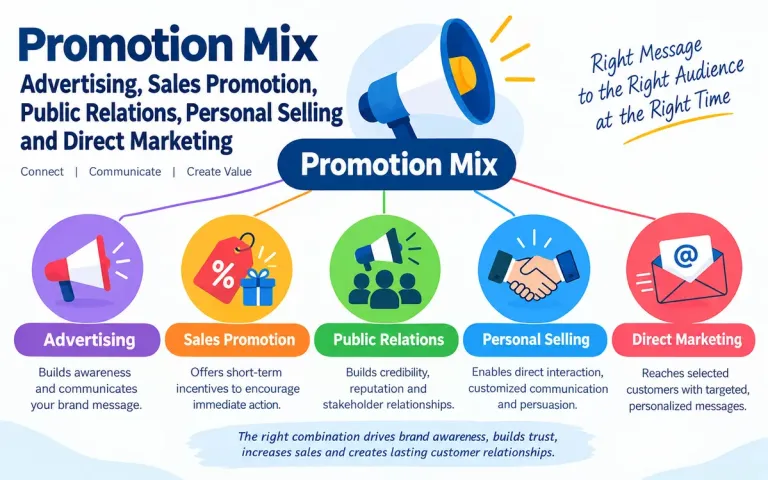
The promotion mix consists of different promotional tools that organizations use to communicate with their target market. The five major elements are Advertising, Sales Promotion, Public Relations, Personal Selling, and Direct Marketing.
In modern marketing, these traditional tools are increasingly combined with digital channels such as social media, search engines, email, websites, mobile applications, and online advertising.
What Is Promotion Mix?
Promotion mix refers to the combination of promotional methods used by a business to communicate information about its products, services, brand, or offers to its target customers.
The main objectives of a promotion mix are to:
Create awareness about a product or brand
Inform customers about product features and benefits
Persuade customers to purchase
Encourage trial and repeat purchases
Build brand image and reputation
Develop customer relationships
Support sales objectives
Differentiate the product from competitors
Communicate special offers and promotions
Build long-term customer loyalty
For example, a smartphone company may use television and YouTube advertising to create awareness, discounts to encourage immediate purchases, public relations to build its reputation, sales representatives to explain products to retailers, and email or SMS marketing to communicate directly with customers.
Elements of Promotion Mix
The five major elements of the promotion mix are:
Advertising
Sales Promotion
Public Relations
Personal Selling
Direct Marketing
Each element has a different role, and businesses often use several of them together as part of an integrated marketing communication strategy.
1. Advertising
Advertising is a paid form of non-personal communication used by an identified sponsor to promote products, services, ideas, or brands.
Advertising allows businesses to reach a large number of people through different media channels.
Examples of Advertising
Common advertising channels include:
Television advertisements
Newspaper advertisements
Magazine advertisements
Radio advertisements
Billboard advertising
YouTube advertisements
Google search advertising
Social media advertising
Website banner advertisements
Mobile advertising
For example, a company launching a new smartphone may run advertisements on YouTube, Instagram, television, and search engines to introduce the product to potential customers.
Objectives of Advertising
The major objectives of advertising include:
1. Creating Awareness
Advertising introduces a new product or brand to potential customers.
2. Providing Information
It communicates information about product features, price, availability, and benefits.
3. Persuading Customers
Advertising attempts to convince customers that a particular product can satisfy their needs better.
4. Reminding Customers
Established brands use advertising to maintain awareness among existing and potential customers.
5. Building Brand Image
Consistent advertising can help establish a particular image or position for a brand.
Advantages of Advertising
Reaches a large audience
Creates brand awareness
Can communicate a consistent message
Useful for launching new products
Supports brand building
Digital advertising can provide measurable campaign data
Limitations of Advertising
Can be expensive
Communication is generally one-way
Customers may ignore advertisements
High advertising exposure does not necessarily guarantee sales
Effectiveness depends on the quality of the message, media, targeting, and execution
2. Sales Promotion
Sales promotion refers to short-term incentives designed to encourage customers, distributors, retailers, or salespeople to take a desired action.
Unlike advertising, which often focuses on creating awareness and communicating value, sales promotion generally provides an immediate incentive to encourage purchase or another response.
Examples of Sales Promotion
Common examples include:
Discounts
Coupons
Cashback offers
Buy-one-get-one offers
Free samples
Contests
Loyalty rewards
Promotional gifts
Limited-time offers
Festival offers
Trade discounts
Quantity discounts
Free trials
For example, an online retailer may offer 20% off for three days to encourage customers to make purchases immediately.
Types of Sales Promotion
Sales promotion can broadly be divided into consumer-oriented and trade-oriented promotion.
Consumer Sales Promotion
These promotions are targeted at final consumers.
Examples include:
Coupons
Discounts
Free samples
Cashback
Contests
Loyalty programmes
Special offers
Trade Sales Promotion
These promotions are directed toward intermediaries such as wholesalers, distributors, and retailers.
Examples include:
Dealer discounts
Trade allowances
Display incentives
Sales contests
Quantity incentives
Objectives of Sales Promotion
Sales promotion can be used to:
Increase short-term sales
Encourage product trials
Attract new customers
Clear excess inventory
Introduce a new product
Encourage repeat purchases
Support distributors and retailers
Respond to competitive pressure
Advantages of Sales Promotion
Can generate quick customer response
Encourages product trial
Useful for new product launches
Can increase short-term sales
Provides customers with an immediate incentive
Limitations of Sales Promotion
Effects may be temporary
Excessive discounting can reduce perceived value
Customers may become dependent on promotional offers
Frequent promotions can affect brand positioning
Sales promotion alone may not create long-term customer loyalty
3. Public Relations
Public Relations (PR) involves managing communication and relationships between an organization and its various publics, such as customers, employees, investors, media, government bodies, communities, and other stakeholders.
Public relations focuses not only on selling products but also on developing trust, reputation, credibility, and a positive relationship with stakeholders.
Examples of Public Relations
PR activities may include:
Press releases
Media interviews
Press conferences
Corporate social responsibility activities
Community programmes
Public events
Sponsorships
Corporate communications
Crisis communication
Product launches
Media relations
For example, a company may organize a community environmental programme and communicate its activities through media and its corporate website.
Objectives of Public Relations
The major objectives include:
Building a positive corporate image
Developing credibility
Maintaining relationships with stakeholders
Communicating important organizational information
Managing reputation
Responding to crises
Generating media coverage
Supporting product and brand launches
Advantages of Public Relations
Can strengthen credibility
Helps build long-term reputation
Supports stakeholder relationships
Useful during crisis situations
Can generate media attention
Can complement advertising and other promotional activities
Limitations of Public Relations
Organizations have less control over how independent media may present a story
Results can be difficult to measure precisely
Reputation-building generally takes time
Negative publicity can affect organizational image
4. Personal Selling
Personal selling is a form of direct communication in which a salesperson interacts personally with a prospective or existing customer to present a product, answer questions, handle objections, and facilitate a purchase.
It is particularly useful when products are complex, expensive, customized, or require explanation.
Examples of Personal Selling
Personal selling may occur through:
Face-to-face sales meetings
Retail salespeople
Business-to-business sales representatives
Product demonstrations
Sales presentations
Dealer meetings
Sales calls
Online video demonstrations or consultations
For example, a software salesperson may meet a business owner, understand the company's requirements, demonstrate the software, answer questions, discuss pricing, and negotiate the terms.
Personal Selling Process
A typical personal selling process includes:
1. Prospecting
Identifying potential customers.
2. Pre-Approach
Collecting information about the prospective customer before making contact.
3. Approach
Initiating communication with the prospect.
4. Presentation and Demonstration
Explaining the product and demonstrating its benefits.
5. Handling Objections
Answering questions and addressing customer concerns.
6. Closing
Encouraging the customer to make the purchase decision.
7. Follow-Up
Maintaining contact after the sale to ensure customer satisfaction and encourage future business.
Advantages of Personal Selling
Allows two-way communication
Salesperson can customize the message
Customer questions can be answered immediately
Objections can be handled directly
Useful for complex products
Can help build strong customer relationships
Limitations of Personal Selling
Cost per customer contacted can be high
Requires trained salespeople
Reach is generally more limited than mass advertising
Salesperson performance can affect results
The process may take considerable time
5. Direct Marketing
Direct marketing involves communicating directly with selected customers or prospects to generate a response, transaction, or relationship without relying primarily on traditional mass-media communication.
Modern direct marketing frequently uses digital technologies and customer databases.
Examples of Direct Marketing
Common methods include:
Email marketing
SMS marketing
Direct mail
Telemarketing
Catalogues
Mobile app notifications
Personalized website messages
WhatsApp or other messaging campaigns where permitted
Database marketing
For example, an online store may send an email to customers who previously purchased shoes, informing them about a new collection.
Objectives of Direct Marketing
Direct marketing can be used to:
Generate immediate responses
Communicate personalized offers
Encourage repeat purchases
Build customer relationships
Promote new products
Recover abandoned purchases
Retain existing customers
Measure campaign responses
Advantages of Direct Marketing
Can be highly targeted
Allows personalized communication
Response can often be measured
Supports customer relationship management
Can be cost-effective compared with some mass-media campaigns
Digital campaigns can be automated
Limitations of Direct Marketing
Customers may perceive excessive messages as spam
Poor-quality databases can reduce effectiveness
Privacy and consent requirements must be respected
Overcommunication can damage customer relationships
Requires accurate customer data and effective segmentation
Promotion Mix at a Glance
| Promotion Tool | Main Purpose | Communication | Typical Time Orientation | Examples |
|---|---|---|---|---|
| Advertising | Awareness and persuasion | Mostly one-way | Often medium/long term | TV, search ads, social media ads |
| Sales Promotion | Encourage immediate response | One-way or interactive | Short term | Discounts, coupons, cashback |
| Public Relations | Reputation and stakeholder relationships | Two-way/multi-channel | Usually long term | Press releases, events, CSR |
| Personal Selling | Persuasion and relationship building | Two-way | Short to long term | Sales meetings, demonstrations |
| Direct Marketing | Targeted response and relationship | Direct/two-way | Short to long term | Email, SMS, direct mail |
Difference Between Advertising and Sales Promotion
Advertising and sales promotion are often confused, but they have different purposes.
Advertising generally communicates product information, benefits, brand positioning, and persuasive messages to a target audience.
Sales promotion generally provides a short-term incentive to encourage an immediate response.
Example
Suppose a company advertises a new smartphone by communicating its camera quality, design, and features.
At the same time, it may offer:
"Buy this month and receive ₹3,000 cashback."
The advertisement communicates the product's value, while the cashback is a sales promotion designed to encourage immediate purchase.
Difference Between Advertising and Personal Selling
| Advertising | Personal Selling |
|---|---|
| Mostly non-personal communication | Personal communication |
| Usually reaches a large audience | Usually reaches selected prospects |
| Generally one-way | Two-way |
| Limited immediate interaction | Immediate interaction |
| Lower cost per person reached at scale | Higher cost per personal contact |
| Suitable for mass awareness | Suitable for individualized persuasion |
Difference Between Public Relations and Advertising
Advertising involves paid media placement, where the organization generally controls the message and placement.
Public relations focuses more broadly on relationships, reputation, media communication, and stakeholder engagement.
For example, a company may purchase an advertisement in a newspaper. That is advertising.
If a newspaper independently publishes a news story about the company's new community initiative, that is a form of media coverage associated with public relations, although the exact circumstances determine how the coverage was obtained.
Difference Between Personal Selling and Direct Marketing
Personal selling normally involves direct interaction between a salesperson and customer, particularly where discussion, demonstration, negotiation, or relationship building is important.
Direct marketing communicates directly with selected customers or prospects through channels such as email, SMS, direct mail, or targeted digital communication.
For example:
Sales representative meeting a business customer → Personal Selling
Company sending a personalized promotional email → Direct Marketing
Factors Influencing the Promotion Mix
A company does not use the same promotional mix for every product. Several factors influence the choice.
1. Nature of the Product
Complex or technical products may require personal selling and demonstrations.
Simple consumer products may rely more heavily on advertising and sales promotion.
2. Target Market
The size, location, characteristics, and media habits of the target audience influence promotional decisions.
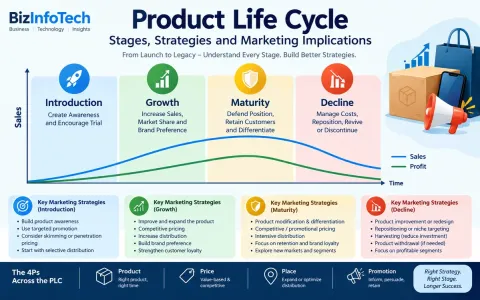
3. Product Life-Cycle Stage
Different promotional tools may be emphasized at different stages.
Introduction Stage
The company may focus on:
Awareness
Advertising
Public relations
Product demonstrations
Trial offers
Growth Stage
The company may emphasize:
Brand building
Competitive advertising
Distribution support
Customer retention
Maturity Stage
The company may use:
Sales promotions
Reminder advertising
Loyalty programmes
Differentiation strategies
Decline Stage
The company may reduce promotional expenditure or focus on selected profitable segments.
4. Promotional Budget
The amount of money available significantly influences the promotional mix.
A small business may rely more on social media, content marketing, email, referrals, and direct customer communication, while a large company may use television, digital advertising, outdoor media, public relations, and other channels.
5. Push and Pull Strategy
Push Strategy
A push strategy focuses on encouraging intermediaries such as distributors and retailers to carry and promote the product.
Personal selling and trade promotions are often important in push strategies.
Pull Strategy
A pull strategy focuses on creating demand among final consumers so that they seek the product from retailers or distributors.
Advertising, consumer sales promotions, and digital marketing can support a pull strategy.
Promotion Mix and Integrated Marketing Communication
Modern businesses generally do not use promotional tools independently. Instead, they combine them through Integrated Marketing Communication (IMC).
IMC means coordinating different communication channels so that customers receive a consistent and meaningful brand message.
For example, when launching a new product, a company might use:
Advertising → Create awareness
Public Relations → Generate credibility and media attention
Sales Promotion → Encourage trial
Personal Selling → Explain the product and address objections
Direct Marketing → Follow up with interested customers
The effectiveness of the campaign depends not simply on using more promotional tools, but on selecting and coordinating the tools according to the company's objectives and target audience.
Digital Transformation of the Promotion Mix
Digital technology has changed how organizations implement the promotion mix.
Traditional advertising has expanded into:
Search engine advertising
Social media advertising
Video advertising
Display advertising
Influencer campaigns
Mobile advertising
Sales promotion now commonly includes:
Digital coupons
Cashback
App-based offers
Personalized discounts
Flash sales
Public relations has expanded into:
Online press releases
Social media communication
Online reputation management
Corporate blogs
Digital events
Personal selling increasingly includes:
Video demonstrations
Online consultations
Social selling
Video meetings
CRM-supported sales processes
Direct marketing has expanded into:
Email automation
SMS campaigns
App notifications
Personalized digital campaigns
Customer relationship management systems
Thus, digital technology has not eliminated the traditional promotion mix; instead, it has expanded the channels through which these promotional activities can be performed.
Example of a Promotion Mix Strategy
Consider a company launching a new fitness application.
The company could design its promotion mix as follows:
Advertising
Run search, social media, and video advertisements introducing the application.
Sales Promotion
Offer a one-month free trial or introductory subscription price.
Public Relations
Publish information about the application and its health and fitness features through relevant media and industry channels.
Personal Selling
Sales representatives demonstrate the application to corporate clients interested in employee wellness programmes.
Direct Marketing
Send personalized emails and notifications to users who registered but did not subscribe.
Together, these activities can support awareness, trial, conversion, and relationship building.
Importance of Promotion Mix in Marketing
A well-designed promotion mix can help organizations:
Create product awareness
Communicate product benefits
Influence customer decisions
Increase sales
Support new product launches
Build brand identity
Develop customer relationships
Respond to competitors
Strengthen customer retention
Support overall marketing objectives
However, promotional activities should be aligned with the product, target market, positioning, budget, and overall marketing strategy.
Conclusion
The promotion mix is an essential component of marketing communication. The five major elements—Advertising, Sales Promotion, Public Relations, Personal Selling, and Direct Marketing—serve different purposes and have different strengths and limitations.
Advertising can create awareness and communicate a consistent brand message. Sales promotion can encourage immediate action. Public relations can support reputation and stakeholder relationships. Personal selling allows direct interaction and customized communication. Direct marketing enables targeted and measurable communication with customers.
In modern marketing, businesses increasingly combine these tools with digital channels and coordinate them through Integrated Marketing Communication (IMC).
The key to an effective promotion mix is not simply using every promotional tool. Rather, businesses need to select the appropriate combination based on their marketing objectives, target audience, product characteristics, customer journey, promotional budget, and competitive environment.
Frequently Asked Questions (FAQs)
What is a promotion mix?
Promotion mix is the combination of promotional tools used by a business to communicate with its target market and support marketing objectives.
What are the five elements of the promotion mix?
The five major elements are:
Advertising
Sales Promotion
Public Relations
Personal Selling
Direct Marketing
What is the difference between advertising and sales promotion?
Advertising generally focuses on communicating information, creating awareness, and influencing attitudes, while sales promotion generally uses short-term incentives to encourage an immediate response.
What is personal selling?
Personal selling is direct communication between a salesperson and a prospective or existing customer for the purpose of explaining, demonstrating, persuading, and facilitating the purchase of a product or service.
What is direct marketing?
Direct marketing involves communicating directly with selected customers or prospects through channels such as email, SMS, direct mail, telephone, and digital messaging to generate a response or build a relationship.
Why is public relations important?
Public relations helps organizations manage communication and relationships with stakeholders and can support credibility, reputation, and organizational image.
What is Integrated Marketing Communication?
Integrated Marketing Communication (IMC) is the coordination of different communication tools and channels to deliver consistent and complementary messages to the target audience.
What is the difference between push and pull promotion strategies?
A push strategy focuses on encouraging intermediaries to stock, promote, and sell a product, while a pull strategy focuses on creating consumer demand so customers seek the product through distribution channels.
Related articles:-
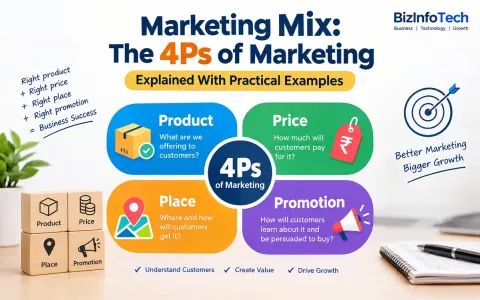
Marketing Mix: The 4Ps of Marketing Explained With Examples
What Is Marketing Management? Definition, Importance, Functions and Process
Marketing Environment: Micro and Macro Factors That Influence Business Decisions
Market Segmentation: How Businesses Divide and Target Different Customer Groups
Target Market Selection: How to Choose the Right Customers
Positioning Strategy: How to Create a Strong Position in the Customer's Mind
Consumer Behaviour: Understanding How Customers Make Buying Decisions
Pricing Strategy: Methods, Objectives & Factors Influencing Pricing Decisions
Product Life Cycle: Stages, Strategies and Marketing Implications