Introduction
Why does a customer choose one product over another? Why do some customers compare several alternatives before purchasing, while others make an immediate decision? Why does a customer prefer one brand even when another brand offers a similar product at a lower price?
These questions are central to consumer behaviour.
Consumer behaviour is an important area of marketing management that examines how individuals and groups identify their needs, search for information, evaluate alternatives, make purchase decisions, use products or services, and respond after consumption.
Understanding consumer behaviour helps businesses move beyond simply producing products. It enables them to understand what customers want, why they want it, how they make decisions, and what influences those decisions.
In today's competitive and digitally connected marketplace, consumer behaviour is influenced not only by product quality and price but also by social media, online reviews, digital experiences, cultural values, personal preferences, technology, and changing lifestyles.
What Is Consumer Behaviour?
Consumer behaviour is the study of how individuals, groups, or organizations identify needs and wants, search for solutions, evaluate alternatives, make purchasing decisions, use products or services, and respond after purchase.
In simple terms:
Consumer behaviour studies why, what, when, where, and how customers make purchasing decisions and how they behave before, during, and after consumption.
For example, when a person wants to purchase a smartphone, the consumer behaviour process may involve:
Recognizing the need for a new smartphone
Searching for information
Comparing different brands and models
Evaluating price and features
Selecting a product
Purchasing it
Using the product
Evaluating the purchase afterward
Consumer behaviour therefore extends beyond the actual purchase.
Why Is Consumer Behaviour Important?
Understanding consumer behaviour is important because businesses ultimately depend on customers.
1. Helps Identify Customer Needs
Consumer behaviour helps businesses understand what customers actually need and want.
For example, customers purchasing a laptop may value different benefits:
Low price
Performance
Portability
Battery life
Gaming capability
Professional use
Understanding these differences helps businesses develop appropriate products and marketing strategies.
2. Helps Businesses Develop Better Products
Consumer research can reveal problems with existing products and identify opportunities for new products.
For example, customer feedback may show that users want:
Easier interfaces
Better customer support
Faster delivery
Smaller packaging
Additional features
Businesses can use these insights in product development.
3. Supports Marketing Strategy
Consumer behaviour influences decisions related to:
Product
Price
Promotion
Distribution
Branding
Customer experience
A marketing strategy becomes more effective when it is based on an understanding of customer needs and decision-making processes.
4. Helps Understand Buying Motives
Customers do not always purchase products for purely functional reasons.
A customer may purchase a premium product because of:
Status
Self-expression
Social recognition
Lifestyle
Emotional satisfaction
Understanding these motives can help marketers design more relevant offerings and communication.
5. Improves Customer Experience
Businesses can identify problems throughout the customer journey.
For example:
Search → Website visit → Product comparison → Purchase → Delivery → Usage → Support
Understanding customer behavior at each stage can help businesses reduce friction and improve the overall experience.
6. Supports Customer Retention
Understanding post-purchase behavior can help businesses improve satisfaction and encourage repeat purchases.
Satisfied customers may:
Purchase again
Recommend the brand
Leave positive reviews
Develop brand loyalty
Consumer Behaviour Process
Consumer buying behaviour can be understood as a sequence of stages.
The traditional consumer decision-making process generally includes:
Need recognition
Information search
Evaluation of alternatives
Purchase decision
Post-purchase behaviour
Let's examine each stage.
1. Need Recognition
The buying process begins when a consumer recognizes a need or problem.
A difference develops between the consumer's current state and desired state.
For example:
A person's current smartphone may be slow or have a damaged battery.
The person realizes:
"I need a new smartphone."
The need may be triggered by:
Internal factors
External stimuli
Changing circumstances
Product deterioration
Advertising
Social influence
New technology
Internal Stimulus
An internal condition creates the need.
Example:
Hunger creates the desire for food.
External Stimulus
Something outside the individual triggers the need.
Example:
Seeing an advertisement for a new smartphone may create interest in upgrading.
2. Information Search
After recognizing a need, consumers may search for information about possible solutions.
The amount of information search varies depending on the product and the consumer.
For a routine purchase, the customer may need very little information.
For an expensive purchase, the customer may conduct extensive research.
Information may come from:
Search engines
Company websites
Product reviews
Social media
Friends and family
Salespeople
Online marketplaces
Demonstrations
Previous experience
For example, someone purchasing a laptop may search for:
Best laptops in a price range
Processor comparison
Battery performance
Customer reviews
Warranty
After-sales service
3. Evaluation of Alternatives
After collecting information, consumers compare available alternatives.
They may evaluate products based on criteria such as:
Price
Quality
Features
Brand reputation
Design
Performance
Convenience
Warranty
Customer reviews
For example, a customer comparing three smartphones may evaluate:
| Factor | Brand A | Brand B | Brand C |
|---|---|---|---|
| Price | Medium | Low | High |
| Camera | High | Medium | High |
| Battery | High | High | Medium |
| Brand reputation | High | Medium | High |
| Features | Medium | High | High |
The importance assigned to each factor can vary from customer to customer.
4. Purchase Decision
After evaluating alternatives, the consumer makes a purchase decision.
However, the final purchase may still be affected by factors such as:
Availability
Price changes
Promotions
Opinions of others
Payment options
Delivery time
Unexpected circumstances
For example, a customer may prefer one smartphone but purchase another because the preferred model is unavailable.
Therefore, purchase intention and actual purchase do not always have to be identical.
5. Post-Purchase Behaviour
Consumer behaviour does not end after the purchase.
After using the product, consumers evaluate whether their expectations were met.
If the product performs as expected, the customer may experience satisfaction.
If performance is below expectations, dissatisfaction may occur.
The customer may then:
Request a refund
Contact customer support
Leave a negative review
Switch brands
Avoid future purchases
If the experience is positive, the customer may:
Repurchase
Recommend the product
Leave a positive review
Become more loyal to the brand
Consumer Buying Decision Process Example
Consider a customer purchasing a laptop.
Need Recognition
The customer's existing laptop is slow and unsuitable for current work.
Information Search
The customer searches Google, watches product videos, reads reviews, and asks friends for recommendations.
Evaluation of Alternatives
The customer compares several brands based on:
Price
Processor
RAM
Storage
Battery
Warranty
Purchase Decision
The customer selects one laptop and completes the purchase.
Post-Purchase Behaviour
After using the laptop, the customer evaluates whether it meets expectations.
If satisfied, the customer may recommend the laptop to others.
This simple example demonstrates the complete consumer buying decision process.
Factors Influencing Consumer Behaviour
Consumer behaviour is influenced by several categories of factors.
The major categories include:
Cultural factors
Social factors
Personal factors
Psychological factors
1. Cultural Factors
Culture influences values, beliefs, preferences, and consumption patterns.
Cultural factors may include:
Culture
Subculture
Social values
Traditions
Customs
Lifestyle patterns
For example, food preferences can vary significantly between different cultural groups and geographical markets.
Businesses operating across different markets therefore need to understand local cultural characteristics.
2. Social Factors
Consumers are influenced by people and groups around them.
Important social influences include:
Family
Friends
Reference groups
Social networks
Roles
Status
Communities
For example, a consumer may purchase a product because friends or colleagues recommend it.
Online communities and social media have expanded the importance of social influence in purchasing decisions.
3. Personal Factors
Individual characteristics also affect consumer decisions.
These may include:
Age
Occupation
Income
Lifestyle
Personality
Stage of life
Economic circumstances
For example, the product preferences of a college student may differ from those of a working professional or a retired person.
However, marketers should avoid assuming that all individuals with the same demographic characteristics behave identically.
4. Psychological Factors
Psychological factors influence how consumers interpret information and make decisions.
Important psychological factors include:
Motivation
Perception
Learning
Beliefs
Attitudes
Memory
These factors help explain why two customers exposed to the same advertisement may respond differently.
Motivation and Consumer Behaviour
Motivation is the internal drive that encourages a person to take action to satisfy a need or achieve a goal.
For example, a consumer may purchase:
Food to satisfy hunger
Insurance to reduce perceived financial risk
A smartphone to improve communication
Fitness equipment to support health and exercise goals
Professional clothing to meet workplace expectations
Understanding customer motivation helps marketers communicate relevant benefits.
Perception and Consumer Behaviour
Perception is the process through which individuals select, organize, and interpret information.
Two consumers may receive the same marketing message but interpret it differently.
For example, one customer may perceive a high price as evidence of superior quality, while another may perceive the same price as excessive.
Therefore, marketers need to understand not only what they communicate but also how customers perceive the communication.
Learning and Consumer Behaviour
Consumers learn from:
Previous purchases
Product experiences
Advertising
Reviews
Recommendations
Repeated exposure
A positive previous experience can influence future purchasing behaviour.
For example, if a customer has repeatedly received good service from a particular brand, the customer may be more willing to purchase from that brand again.
Beliefs and Attitudes
A belief is a consumer's perception or opinion about a product, brand, or attribute.
An attitude represents a relatively enduring evaluation or predisposition toward an object.
For example, a consumer may believe that a particular brand provides reliable products and consequently develop a positive attitude toward that brand.
Beliefs and attitudes can influence purchase intentions and brand preferences.
Types of Consumer Buying Behaviour
The level of consumer involvement and perceived differences among alternatives can influence the type of buying behaviour.
Four commonly discussed categories are:
1. Complex Buying Behaviour
This occurs when:
Consumer involvement is high
Differences among alternatives are significant
Examples may include:
Cars
Homes
Expensive technology
Professional equipment
Consumers are likely to conduct substantial information search and evaluation.
2. Dissonance-Reducing Buying Behaviour
This may occur when:
Consumer involvement is high
Perceived differences among alternatives are relatively limited
After purchasing, consumers may seek reassurance that they made the right decision.
For example, after purchasing an expensive product, a customer may read positive reviews to confirm the decision.
3. Habitual Buying Behaviour
This occurs when:
Consumer involvement is relatively low
Perceived differences among brands are limited
Examples may include routine purchases such as common household products.
Customers may repeatedly purchase a familiar brand without extensive evaluation.
4. Variety-Seeking Buying Behaviour
This may occur when:
Consumer involvement is relatively low
Perceived differences among brands are noticeable
Consumers may switch brands simply to experience something different.
For example, a customer may regularly try different snack flavors or beverage brands.
Consumer Involvement
Consumer involvement refers to the degree of personal importance, interest, or perceived risk associated with a purchasing decision.
High-involvement purchases generally involve greater consideration.
Examples may include:
Cars
Homes
Higher-priced electronics
Financial products
Professional services
Low-involvement purchases may require less information search.
Examples can include routine household purchases.
Consumer involvement can influence how much information a person searches for and how carefully alternatives are evaluated.
Consumer Behaviour in the Digital Age
Digital technology has significantly changed how consumers make purchasing decisions.
Consumers can now:
Search for products instantly
Compare prices
Read reviews
Watch demonstrations
Ask questions online
Compare alternatives
Purchase through mobile devices
Share experiences publicly
The traditional buying journey has therefore become more connected and information-rich.
For example:
Search → Compare → Review → Visit website → Watch video → Purchase → Review product
A customer may move between several online and offline touchpoints before making a decision.
Role of Social Media in Consumer Behaviour
Social media can influence consumer awareness, preferences, and purchase decisions.
Consumers may discover products through:
Short-form videos
Influencer content
Brand posts
Customer reviews
Recommendations
Online communities
Social proof can be particularly important when customers are uncertain about a purchase.
Businesses therefore need to understand that customers can influence one another through digital platforms.
Role of Online Reviews
Online reviews have become an important source of information during the evaluation stage.
Customers may examine:
Product ratings
Customer comments
Photos
Video reviews
Complaints
Brand responses
Reviews can reduce uncertainty by providing information from other customers.
However, consumers and businesses should recognize that online reviews may vary in quality and reliability.
Consumer Behaviour and E-Commerce
E-commerce platforms provide businesses with extensive opportunities to understand consumer behaviour.
Businesses can analyze activities such as:
Product searches
Product views
Add-to-cart activity
Purchases
Repeat purchases
Cart abandonment
Browsing patterns
These insights can help businesses understand customer journeys and improve their digital experiences.
For example, if many customers add a product to their cart but do not complete the purchase, the business may investigate possible issues with:
Pricing
Delivery charges
Payment options
Website usability
Customer trust
Checkout complexity
Consumer Behaviour and Digital Marketing
Understanding consumer behaviour is essential for digital marketing.
Different stages of the buying process require different types of content.
Need Recognition
Educational content can help customers understand a problem.
Information Search
Guides, articles, videos, and comparison content can provide useful information.
Evaluation
Case studies, demonstrations, reviews, and comparisons can help customers evaluate alternatives.
Purchase
Clear product information, pricing, trust signals, and easy checkout can support purchasing.
Post-Purchase
Support content, feedback systems, and follow-up communication can improve the customer experience.
This creates a connection between consumer behaviour and the digital customer journey.
Consumer Behaviour and SEO
Consumer behaviour is also closely connected to SEO because search engines often become part of the consumer's information-search process.
A customer may search:
"best laptop for MBA students"
before comparing products.
Another customer may search:
"best website development company for small business"
before contacting a service provider.
These searches reflect different stages of the customer's decision-making process.
Businesses can therefore create content that addresses different types of search intent.
Informational Intent
The customer wants to learn.
Example:
"What is website development?"
Commercial Investigation
The customer is comparing alternatives.
Example:
"Website development services for small businesses"
Transactional Intent
The customer is ready to take action.
Example:
"Hire website developer"
Understanding consumer behaviour can therefore help businesses develop more relevant SEO content.
Consumer Behaviour and Artificial Intelligence
Artificial intelligence is increasingly being used to analyze customer behaviour.
Businesses can use AI and data analytics for applications such as:
Customer segmentation
Product recommendations
Personalized content
Predictive analytics
Customer churn analysis
Purchase prediction
Chatbots
Marketing automation
For example, an e-commerce platform may analyze previous purchases and browsing behaviour to recommend products that may be relevant to a customer.
However, businesses should use customer data responsibly and consider privacy, security, transparency, and applicable legal requirements.
Consumer Behaviour and Customer Experience
Customer experience includes the customer's interactions with a business across multiple touchpoints.
These may include:
Advertisement → Website → Product information → Purchase → Delivery → Support → Feedback
A problem at any stage can influence the customer's overall perception of the brand.
For example, an excellent product combined with poor customer support may result in an unsatisfactory overall experience.
Therefore, businesses should study consumer behaviour throughout the complete customer journey rather than focusing only on the purchase.
Consumer Behaviour and Brand Loyalty
Positive experiences can contribute to customer loyalty.
A customer may repeatedly choose a brand because of:
Satisfaction
Trust
Familiarity
Consistent quality
Convenience
Positive experiences
Emotional connection
However, loyalty is not always permanent. Competitors, changing needs, price differences, and negative experiences can influence future behaviour.
Businesses therefore need to continuously create and maintain customer value.
How Businesses Can Study Consumer Behaviour
Businesses can use several research methods.
Surveys
Customers can be asked about:
Preferences
Satisfaction
Motivations
Purchase decisions
Interviews
One-to-one interviews can provide deeper qualitative insights.
Focus Groups
A small group of customers can discuss products, concepts, or experiences.
Observation
Businesses can observe how customers interact with products or services.
Website Analytics
Digital analytics can reveal:
Traffic sources
Page visits
Engagement
Conversion behaviour
Customer journeys
Purchase Data
Transaction records can reveal:
Buying frequency
Average purchase value
Repeat purchases
Product preferences
Combining different research methods can provide a more complete understanding of consumer behaviour.
Consumer Behaviour Example: Buying a Smartphone
Let's consider the complete process.
1. Need Recognition
The customer's existing phone becomes outdated or no longer meets requirements.
2. Information Search
The customer searches online for suitable smartphones.
3. Evaluation of Alternatives
The customer compares:
Price
Camera
Battery
Storage
Performance
Brand
Reviews
4. Purchase Decision
The customer selects a particular model.
5. Post-Purchase Behaviour
The customer uses the smartphone and evaluates its performance.
If satisfied, the customer may recommend it to friends or purchase the same brand again in the future.
This example demonstrates how consumer behaviour extends across the entire decision-making process.
Consumer Behaviour vs Consumer Buying Decision Process
These two concepts are related but should not be confused.
Consumer Behaviour
Consumer behaviour is the broader study of how consumers think, feel, behave, and make decisions before, during, and after consumption.
Consumer Buying Decision Process
The consumer buying decision process refers specifically to the stages a consumer may pass through when making a purchase.
The decision process is commonly described as:
Need Recognition → Information Search → Evaluation of Alternatives → Purchase Decision → Post-Purchase Behaviour
Therefore, the buying decision process is one important component of the broader field of consumer behaviour.
Importance of Consumer Behaviour for Marketing Managers
Marketing managers need to understand consumer behaviour when making decisions about:
Product Strategy
What should the product offer?
Pricing Strategy
How much are customers willing to pay?
Promotion Strategy
What message will be relevant to customers?
Distribution Strategy
Where and how do customers prefer to purchase?
Branding
What associations should the brand create?
Customer Experience
How can the business improve interactions with customers?
Consumer behaviour therefore influences almost every major marketing decision.
Common Mistakes Businesses Make When Understanding Consumers
1. Assuming All Customers Are the Same
Customers can have very different needs and motivations.
2. Relying Only on Demographic Data
Age, income, or location alone may not explain actual buying behaviour.
3. Ignoring Post-Purchase Behaviour
The customer relationship continues after the sale.
4. Ignoring Customer Feedback
Feedback can reveal problems that internal assumptions may miss.
5. Focusing Only on Price
Price is important, but customers may also value quality, convenience, service, trust, and experience.
6. Ignoring Digital Behaviour
Modern customers frequently search, compare, review, and purchase through digital channels.
7. Making Decisions Without Data
Business assumptions should ideally be tested through customer research and behavioral evidence.
Frequently Asked Questions
What is consumer behaviour?
Consumer behaviour is the study of how individuals and groups identify needs, search for information, evaluate alternatives, purchase, use, and respond to products or services.
Why is consumer behaviour important?
It helps businesses understand customer needs, develop products, create marketing strategies, improve customer experiences, and build stronger customer relationships.
What are the five stages of the consumer buying decision process?
The commonly discussed five stages are:
Need recognition
Information search
Evaluation of alternatives
Purchase decision
Post-purchase behaviour
What factors influence consumer behaviour?
Major factors include cultural, social, personal, and psychological factors.
What is the difference between consumer behaviour and buying behaviour?
Consumer behaviour is the broader study of consumer actions, thoughts, influences, and responses, while buying behaviour generally focuses more specifically on purchasing patterns and decisions.
What is consumer involvement?
Consumer involvement refers to the degree of importance, interest, or perceived risk associated with a purchasing decision.
How does digital technology affect consumer behaviour?
Digital technology allows consumers to search for information, compare products, read reviews, interact with brands, and make purchases more easily across multiple digital channels.
How can businesses understand consumer behaviour?
Businesses can use surveys, interviews, focus groups, observation, website analytics, customer feedback, and purchase data to understand consumer behaviour.
Conclusion
Consumer behaviour is a fundamental concept in marketing management because businesses cannot develop effective marketing strategies without understanding the people they want to serve.
Consumers differ in their needs, motivations, perceptions, attitudes, lifestyles, experiences, and buying behaviour. Their decisions can also be influenced by cultural, social, personal, psychological, and digital factors.
The consumer buying decision process generally includes:
Need Recognition → Information Search → Evaluation of Alternatives → Purchase Decision → Post-Purchase Behaviour
Understanding this process helps businesses identify opportunities to provide useful information, improve products, create relevant marketing communication, simplify purchasing, and improve post-purchase experiences.
In the digital environment, consumer behaviour has become even more dynamic. Search engines, social media, online reviews, e-commerce platforms, analytics, and artificial intelligence have created new ways for customers to discover, evaluate, purchase, and review products.
For marketing managers, the key lesson is simple:
Do not focus only on what the business wants to sell. Understand what customers need, why they make decisions, how they evaluate alternatives, and what happens after the purchase.
Key Takeaway
Understand the customer → Identify the need → Understand the decision process → Create value → Deliver a positive experience → Build long-term relationships
Consumer behaviour is therefore not simply about understanding what customers buy. It is about understanding why, how, when, where, and under what circumstances they make those decisions.
Related aricles:-
Positioning Strategy: How to Create a Strong Position in the Customer's Mind
Target Market Selection: How to Choose the Right Customers
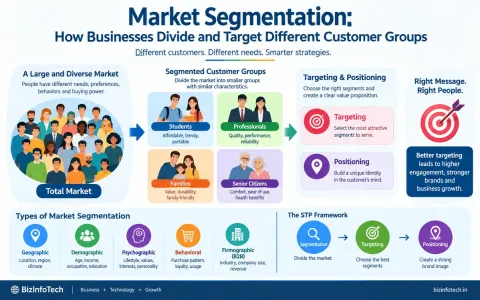
Market Segmentation: How Businesses Divide and Target Different Customer Groups
Marketing Environment: Micro and Macro Factors That Influence Business Decisions