Artificial Intelligence (AI) is no longer a technology reserved for large corporations. In 2026, small businesses are increasingly using AI to automate repetitive tasks, improve customer experiences, and make better business decisions. Companies that fail to adopt AI risk falling behind competitors who can operate more efficiently and respond faster to market changes.
What Is an AI Strategy?
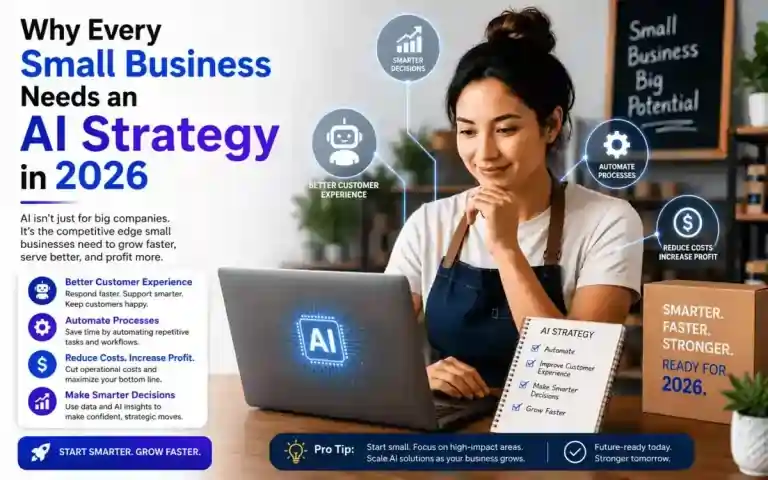
An AI strategy is a structured plan that identifies how a business can use artificial intelligence to achieve specific objectives. Rather than adopting AI tools randomly, businesses should focus on areas where AI can create measurable value.
A successful AI strategy typically includes:
- Identifying business challenges and opportunities
- Selecting appropriate AI tools
- Training employees to use AI effectively
- Measuring results and return on investment
- Continuously improving AI implementation
Benefits of AI for Small Businesses
1. Increased Productivity
AI can automate repetitive tasks such as data entry, scheduling, customer support, and content creation. This allows employees to focus on higher-value activities that require creativity and decision-making.
2. Better Customer Service
AI-powered chatbots and virtual assistants can answer common customer questions 24/7. Faster response times improve customer satisfaction while reducing support costs.
3. Smarter Marketing
Businesses can use AI to generate content, optimize advertising campaigns, analyze customer behavior, and personalize marketing messages. This often results in higher engagement and conversion rates.
4. Improved Decision-Making
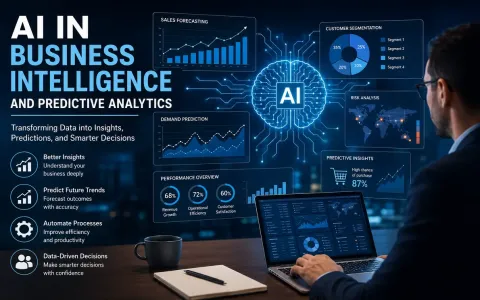
AI can analyze large amounts of data and identify patterns that may not be visible through traditional analysis. Business owners can use these insights to make more informed decisions.
Common AI Tools for Small Businesses
Some popular categories include:
- AI Writing Tools
- Customer Support Chatbots
- Marketing Automation Platforms
- Predictive Analytics Tools
- AI-Powered CRM Systems
The key is selecting tools that directly address specific business needs rather than adopting technology simply because it is popular.
Challenges to Consider
While AI offers significant benefits, businesses should also consider:
- Data privacy and security requirements
- Employee training needs
- Integration with existing systems
- Cost of implementation
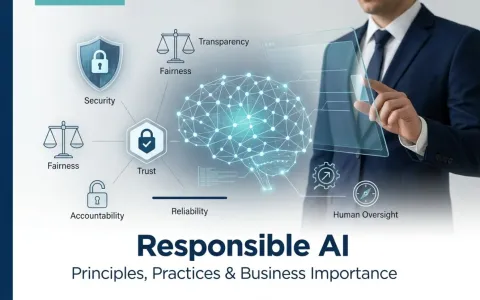
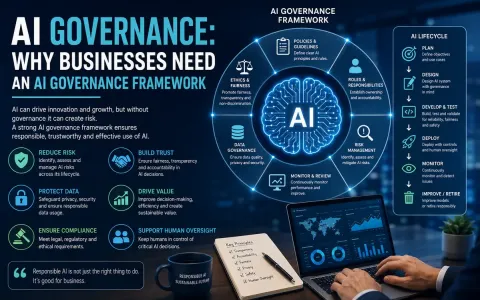
- Maintaining human oversight
AI should complement human expertise rather than completely replace it.
Conclusion
Artificial Intelligence is becoming a critical business capability rather than an optional advantage. Small businesses that develop a clear AI strategy can improve productivity, enhance customer experiences, and compete more effectively in an increasingly digital marketplace.
The best approach is to start small, focus on solving real business problems, and gradually expand AI adoption as results become evident. Businesses that begin their AI journey today will be better positioned for growth and innovation in the years ahead.
Related Articles:
01. How AI Is Transforming Strategic Decision-Making for Small Businesses in 2026.
02. Top 5 AI Tools Every Small Business Should Use in 2025.
03. How Generative AI is Transforming Digital Marketing Strategies.
04. AI Integration in Business: Opportunities and Challenges.
05. 10 Game-Changing AI Tools Revolutionizing Business in 2025