Introduction
Imagine that you have written an excellent article and published it on your website. The content is informative, well-written, and visually appealing. However, after several weeks, you discover that very few people are visiting the page.
What went wrong?
One possible reason is that the content does not match the words and phrases people actually use when searching for information.
This is where keyword research becomes important.
Keyword research is one of the fundamental activities in Search Engine Optimization (SEO). It helps website owners, marketers, bloggers, and content creators understand what their target audience searches for online.
By identifying relevant search terms and understanding the intent behind them, you can create content that better matches what users are looking for.
For example, a website about digital marketing might want to publish an article about SEO. Instead of simply writing about a broad topic such as "SEO," keyword research can help identify more specific topics such as:
- What is SEO?
- How does SEO work?
- SEO for beginners
- On-page SEO
- Technical SEO
- How to improve website ranking
Each search query represents a potential information need.
The purpose of keyword research is therefore not simply to find popular words and insert them repeatedly into an article. Modern keyword research is about understanding your audience, their questions, their problems, and their search intent.
This guide explains keyword research from the ground up and provides a practical framework for beginners.
Discover also the related article:- How Do Search Engines Work? Crawling, Indexing, and Ranking Explained
What Is Keyword Research?
Keyword research is the process of identifying and analyzing the words and phrases that people enter into search engines when looking for information, products, services, or solutions.
These words and phrases are commonly called keywords or search queries.
For example, someone interested in learning digital marketing might search for:
Another person who wants to improve a website might search for:
"How to improve SEO"
A business owner might search for:
"Best digital marketing agency"
Although all three queries relate to digital marketing, their purposes are different.
Keyword research helps you understand these differences so that you can create the right content for the right audience.
Why Is Keyword Research Important for SEO?
Keyword research plays an important role in SEO because it connects what people search for with the content you create.
It can help you:
1. Understand Your Audience
Keyword research provides insights into the questions and problems your target audience is interested in.
2. Discover Content Ideas
Search queries can generate ideas for:
- Blog posts
- Tutorials
- Guides
- Videos
- FAQs
- Courses
- E-books
3. Understand Search Intent
A keyword can reveal what a user expects to find.
For example:
"What is SEO?"
indicates an informational need.
Meanwhile:
"SEO tools"
could indicate that the user is researching available tools.
4. Identify Opportunities
Keyword research can reveal topics where there is a strong audience need but relatively limited competition.
5. Improve Content Relevance
Using the language your audience naturally uses can make your content more relevant to their needs.
6. Build a Content Strategy
A collection of related keywords can help you develop an organized content plan.
For example:
Main Topic: SEO
→ What is SEO?
→ How do search engines work?
→ Keyword research
→ On-page SEO
→ Technical SEO
→ Off-page SEO
This approach can help create a connected topic cluster.
What Is a Keyword?
A keyword is a word or phrase used to describe a user's search query.
Keywords can be classified into different categories based on their length, specificity, and intent.
The most common categories are:
- Short-tail keywords
- Long-tail keywords
- Branded keywords
- Non-branded keywords
- Informational keywords
- Commercial keywords
- Transactional keywords
- Navigational keywords
Let's examine them in detail.
Short-Tail Keywords
Short-tail keywords are broad search terms that usually contain one or two words.
Examples include:
- SEO
- Digital marketing
- Management
- Technology
- Marketing
These keywords may have a large search audience but are often highly competitive.
For example, ranking for the keyword "SEO" can be significantly more difficult than ranking for a specific long-tail query.
Long-Tail Keywords
Long-tail keywords are more specific search phrases, usually containing several words.
Examples include:
- SEO tips for small business websites
- How to do keyword research for beginners
- Best digital marketing strategies for small businesses
- How to improve website ranking on Google
Long-tail keywords often have lower individual search volume than broad keywords.
However, they can be valuable because they often reflect a more specific user need.
For a new or small website, targeting relevant long-tail keywords can be a practical starting point.
Branded Keywords
Branded keywords include the name of a specific brand, organization, or website.
Examples include:
- BizInfotech
- Google Search Console
- Microsoft Excel
These searches usually indicate that users are specifically looking for a particular brand or service.
Non-Branded Keywords
Non-branded keywords do not include a specific brand name.
Examples include:
- SEO tools
- Digital marketing course
- Best project management software
These keywords can be useful for attracting users who are still exploring their options.
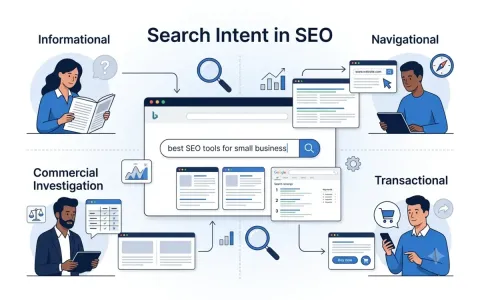
Understanding Search Intent
One of the most important concepts in keyword research is search intent.
Search intent refers to the reason behind a user's search.
Before targeting a keyword, ask:
What does the user actually want to accomplish?
Search intent can generally be divided into four broad categories.
1. Informational Intent
The user wants to learn something.
Examples:
- What is SEO?
- How does digital marketing work?
- What is consumer behavior?
- How to conduct keyword research?
These keywords are ideal for:
- Blog posts
- Guides
- Tutorials
- Educational articles
2. Navigational Intent
The user is trying to reach a particular website or page.
Examples:
- Google Search Console login
- BizInfotech
The user already has a destination in mind.
3. Commercial Investigation
The user is researching options before making a decision.
Examples:
- Best SEO tools
- Best laptops for students
- SEO software comparison
These searches often occur before a purchase.
Suitable content includes:
- Comparison articles
- Product reviews
- "Best of" lists
- Buying guides
4. Transactional Intent
The user is ready to take an action, such as purchasing or subscribing.
Examples:
- Buy SEO software
- Digital marketing course online
- Subscribe to SEO tool
These searches are often highly valuable for businesses.
Keyword Research and the Customer Journey
Keyword intent can also be connected to the customer journey.
A potential customer may move through several stages.
Awareness
The user recognizes a problem.
Why is my website not getting traffic?
Research
The user searches for possible solutions.
How to increase website traffic?
Evaluation
The user compares solutions.
Best SEO tools for website traffic
Decision
The user is ready to act.
Buy SEO software
Understanding this journey helps businesses create content for different stages of the audience's decision-making process.
Important Keyword Metrics
When evaluating keywords, several metrics can be useful.
Search Volume
Search volume indicates approximately how frequently a keyword is searched within a specific period.
A keyword with high search volume may appear attractive.
However, high search volume often means high competition as well.
Therefore, search volume should not be the only factor used to select keywords.
Keyword Difficulty
Keyword difficulty estimates how challenging it may be to rank for a particular search term.
Different SEO tools calculate difficulty differently.
Generally, competitive keywords may require:
- Strong content
- High-quality backlinks
- Website authority
- Strong technical SEO
Beginners may benefit from identifying relevant keywords with lower competition.
Cost Per Click (CPC)
CPC is primarily associated with paid advertising.
It represents the approximate amount advertisers may pay for a click on an advertisement for a particular keyword.
Although CPC is not an organic SEO ranking factor, it can provide insight into the commercial value of a keyword.
Trends and Seasonality
Some keywords are searched consistently throughout the year.
Others experience seasonal changes.
For example:
- "Christmas gifts"
- "Diwali offers"
- "Tax filing"
- "Exam preparation"
Understanding seasonal demand can help publishers plan content in advance.
How to Find Keyword Ideas
There are many ways to discover keyword ideas.
You do not always need expensive SEO software.
Let's look at some practical approaches.
1. Start With Your Main Topic
Begin with a broad topic related to your website.
For example:
SEO
Then brainstorm related questions:
- What is SEO?
- How does SEO work?
- How to improve SEO?
- What is technical SEO?
- What is on-page SEO?
These become your initial keyword ideas.
2. Use Search Engine Suggestions
Search engines themselves can provide useful keyword ideas.
Start typing a query into the search box and observe the suggested searches.
For example:
"keyword research for..."
Search suggestions may reveal related queries that people commonly search for.
3. Check Related Searches
Search engine results pages often display related search queries.
These can provide additional content ideas.
For example, after searching for SEO, related searches may include topics such as:
- SEO tips
- SEO tools
- SEO for beginners
- How SEO works
4. Analyze the "People Also Ask" Section
Search results may also display questions that users commonly ask.
These questions can be excellent sources of FAQ and subheading ideas.
For example:
- What is SEO?
- How long does SEO take?
- Is SEO difficult to learn?
You can use relevant questions to improve the comprehensiveness of your content.
5. Use Google Search Console
If you already have a website receiving search impressions, Google Search Console can provide valuable insights.
It can show:
- Search queries
- Impressions
- Clicks
- Click-through rate
- Average position
One useful strategy is to identify queries where your pages receive impressions but relatively few clicks.
You can then review whether the title, content, and search intent alignment can be improved.
6. Study Competitor Content
Analyze websites that already rank for topics related to your niche.
Look at:
- Topics they cover
- Questions they answer
- Content structure
- Missing information
- Internal links
The goal should not be to copy competitors.
Instead, identify opportunities to create content that is more useful, clearer, more accurate, or more comprehensive.
Keyword Research Tools
Several tools can assist with keyword research.
Google Keyword Planner
Useful for researching keywords primarily in the context of Google Ads and understanding search demand.
Google Search Console
Useful for analyzing the queries through which your existing website receives search impressions and clicks.
Google Trends
Useful for understanding changes in search interest and comparing topics over time.
Ahrefs
A popular SEO platform offering keyword research, competitor analysis, backlink analysis, and other SEO features.
Semrush
A comprehensive digital marketing platform with tools for keyword research, SEO analysis, competitor research, and content planning.
Ubersuggest
A keyword research and SEO tool designed to provide keyword ideas and related metrics.
The best tool depends on your objectives, budget, and level of SEO expertise.
For beginners, starting with free or already available data sources can be a practical approach.
How to Choose the Right Keywords
Finding keywords is only the first step.
The next challenge is selecting the keywords that are most relevant to your website.
Consider the following factors.
Relevance
Does the keyword closely relate to your content and audience?
A keyword with high search volume is not useful if it attracts the wrong audience.
Search Intent
Does your content satisfy what the user wants?
If the search intent is informational, an educational article may be appropriate.
If the intent is transactional, a product or service page may be more suitable.
Competition
Can your website realistically compete for the keyword?
A new website may find it difficult to compete immediately for extremely broad terms.
Search Demand
Does the keyword have sufficient interest to justify creating dedicated content?
Not every keyword needs thousands of monthly searches.
A highly specific keyword can still be valuable if it attracts the right audience.
Business or Strategic Value
Consider whether the keyword supports your broader objectives.
For example, a website offering SEO services may prioritize keywords related to SEO services rather than only informational topics.
Keyword Mapping
Keyword mapping involves assigning target keywords or topic themes to specific pages on your website.
For example:
| Page | Primary Topic |
|---|---|
| Digital Marketing Guide | Digital Marketing |
| What Is SEO? | What is SEO |
| How Search Engines Work | How Search Engines Work |
| Keyword Research Guide | Keyword Research |
| On-Page SEO Guide | On-Page SEO |
| Technical SEO Guide | Technical SEO |
This approach helps prevent unnecessary duplication between pages.
It also creates a logical website structure.
Primary Keywords and Secondary Keywords
A page can have a primary topic while naturally covering related concepts.
For example:
Primary topic: Keyword Research
Related topics might include:
- Keyword research tools
- Search intent
- Long-tail keywords
- Keyword difficulty
- Search volume
- SEO keywords
The goal is not to force every related phrase into the content.
Instead, cover relevant subtopics naturally when they genuinely help the reader.
Keyword Clustering
Keyword clustering involves grouping closely related keywords and search queries into broader topic groups.
For example:
Cluster: SEO Basics
- What is SEO?
- SEO meaning
- SEO for beginners
- How does SEO work?
Cluster: Keyword Research
- What is keyword research?
- Keyword research tools
- How to find keywords
- Long-tail keywords
Cluster: Technical SEO
- What is technical SEO?
- XML sitemap
- Robots.txt
- Canonical tags
Each cluster can become part of a broader content strategy.
This approach can help create a well-organized information architecture.
How to Use Keywords in Content
Once you have selected a topic, use the keyword naturally in important areas.
These may include:
- Page title
- Main heading
- Introduction
- Relevant subheadings
- URL
- Meta description
- Image alt text, when appropriate
- Internal links
However, avoid forcing keywords into every paragraph.
The content should remain natural and easy to read.
What Is Keyword Stuffing?
Keyword stuffing is the practice of excessively repeating keywords in an attempt to manipulate search rankings.
For example:
SEO is important because SEO helps improve SEO. If you want SEO, you need SEO strategies for better SEO results.
This creates a poor user experience.
A better approach is to write naturally and cover the topic comprehensively.
Search engines have become increasingly sophisticated at understanding language and context.
Therefore, focus on helping users rather than repeating keywords unnecessarily.
Common Keyword Research Mistakes
Choosing Only High-Volume Keywords
High search volume does not automatically mean high value.
A highly specific keyword with lower volume may attract more relevant visitors.
Ignoring Search Intent
A page may target the right words but still fail to perform if it does not satisfy the user's expectations.
Always examine the type of content currently ranking for a query.
Targeting Too Many Keywords on One Page
Trying to target dozens of unrelated keywords can make content unfocused.
Instead, create a clear primary topic and cover closely related subtopics.
Ignoring Long-Tail Keywords
Long-tail searches can provide valuable opportunities, particularly for smaller websites.
Copying Competitor Keywords
Competitor research is useful, but copying another website's keyword strategy is not a complete SEO strategy.
Your audience, expertise, and business objectives may be different.
Forgetting Existing Content
Before creating a new page, check whether you already have an article covering the topic.
If so, consider improving the existing content rather than creating a duplicate page.
A Practical Keyword Research Process for Beginners
Here is a simple process you can follow.
Step 1: Define Your Topic
Choose a broad topic related to your website.
Example:
Digital Marketing
Step 2: Brainstorm Search Queries
Think about the questions your audience might ask.
Step 3: Expand Your Keyword List
Use search suggestions, related searches, and keyword research tools.
Step 4: Group Similar Keywords
Create topic clusters.
Step 5: Understand Search Intent
Determine whether each keyword is informational, navigational, commercial, or transactional.
Step 6: Evaluate Competition
Assess whether your website can realistically compete.
Step 7: Select a Primary Topic
Choose one main topic for each page.
Step 8: Create Helpful Content
Write content that fully addresses the user's needs.
Step 9: Optimize Naturally
Use relevant terms naturally in titles, headings, content, URLs, and metadata.
Step 10: Monitor Performance
Review search impressions, clicks, rankings, and user engagement.
Step 11: Improve Over Time
Update content based on new information and performance data.
Example: Keyword Research for a Management and Technology Blog
Suppose you run a website covering management, technology, UGC NET, and research.
You may start with the broad topic:
Digital Marketing
Your keyword research might produce:
- What is digital marketing?
- Digital marketing strategies
- Types of digital marketing
- SEO in digital marketing
- Social media marketing
- Content marketing
- Email marketing
- Digital marketing career
You could then create a content cluster:
Pillar Article:
The Complete Guide to Digital Marketing
Supporting Articles:
What Is SEO?
How Do Search Engines Work?
Keyword Research Guide
On-Page SEO
Technical SEO
Social Media Marketing
Content Marketing
Each article can link to other relevant pages.
This creates a connected content ecosystem that helps users explore related topics.
The Role of AI in Keyword Research
Artificial intelligence is increasingly being used to support keyword and content research.
AI tools can help marketers:
- Generate topic ideas
- Group related queries
- Identify content gaps
- Analyze search intent
- Create content outlines
- Summarize large amounts of data
However, AI-generated suggestions should be reviewed carefully.
AI may generate keywords that:
- Have little real-world search demand
- Are irrelevant to your audience
- Overlap with existing content
- Misinterpret search intent
Therefore, AI should be treated as an assistant, not a replacement for research and human judgment.
The Future of Keyword Research
Search behavior is changing.
Users increasingly interact with search systems through:
- Voice search
- Conversational queries
- AI-powered search experiences
- Visual search
- Mobile devices
As a result, keyword research is gradually moving beyond individual keywords toward a broader understanding of topics, entities, questions, and user intent.
For content creators, this means that simply targeting one exact keyword may not be enough.
A better approach is to understand the complete information need behind a search.
For example, someone searching:
How to improve SEO
may also want to know about:
- Technical SEO
- Content quality
- Internal linking
- Backlinks
- Page performance
- Search intent
A comprehensive article that addresses these related needs may provide greater value than a short page focused only on repeating the exact keyword.
Keyword Research Checklist
Before publishing an SEO-focused article, ask:
- Is the topic relevant to my audience?
- Have I identified the primary search intent?
- Is there a clear primary topic?
- Have I explored related search queries?
- Have I considered long-tail keywords?
- Does the content answer the user's main question?
- Is the title clear and descriptive?
- Are headings logically organized?
- Are keywords used naturally?
- Have I added relevant internal links?
- Is the URL descriptive?
- Is the content original and useful?
- Have I avoided keyword stuffing?
- Will I monitor the page after publication?
Conclusion
Keyword research is one of the fundamental building blocks of an effective SEO strategy.
It helps website owners understand what their audiences are searching for, why they are searching, and what type of content they expect to find.
However, successful keyword research is not simply about finding keywords with the highest search volume.
A strong approach considers:
- Relevance
- Search intent
- Competition
- Search demand
- User needs
- Business objectives
- Content quality
The best keyword strategy connects the right audience with the right information.
For beginners, the process can be simple: start with your audience, identify the questions they ask, research the language they use, understand their intent, and create genuinely useful content that answers those questions.
As search technology continues to evolve, the most effective SEO strategies will increasingly focus on topics, context, entities, and user needs rather than keyword repetition.
Ultimately, the goal of keyword research is not merely to find words that people search for. It is to understand what people want to know, what problems they are trying to solve, and how your content can provide the best possible answer.
Frequently Asked Questions
1. What is keyword research in SEO?
Keyword research is the process of identifying and analyzing the words and phrases users enter into search engines to find information, products, services, or solutions.
2. Why is keyword research important?
It helps you understand your audience, discover content opportunities, identify search intent, and create content that is relevant to what users are searching for.
3. What is a long-tail keyword?
A long-tail keyword is a relatively specific search phrase, usually containing multiple words. These queries often have lower search volume but can be highly relevant to a specific audience.
4. Which keyword research tool is best for beginners?
There is no single best tool for everyone. Google Search Console, Google Trends, Google Keyword Planner, and various third-party SEO tools can all be useful depending on your goals.
5. Should every article target a keyword?
Every article should have a clear topic and audience, but you should avoid forcing keywords into content. Focus primarily on satisfying the user's information needs.
6. Is keyword stuffing good for SEO?
No. Excessive keyword repetition can make content unnatural and create a poor user experience. Keywords should be used naturally and appropriately.
7. How many keywords should I use in an article?
There is no fixed number. Focus on one primary topic and naturally cover relevant related concepts and questions.
8. Are keywords still important in the age of AI?
Yes, but their role is evolving. Modern SEO increasingly requires understanding topics, context, entities, and user intent rather than focusing only on exact-match keyword repetition.