Search engines are the primary gateway to information on the internet. Whenever a user enters a query into Google, Bing, or another search engine, sophisticated systems work behind the scenes to discover relevant web pages, understand their content, evaluate their usefulness, and present the most appropriate results.
Although modern search engines use highly advanced algorithms and artificial intelligence, their fundamental operation can be understood through three core processes:
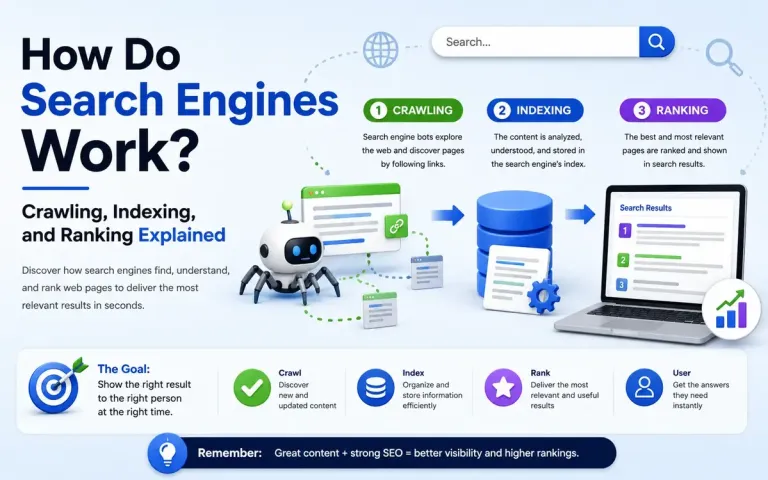
Crawling → Indexing → Ranking
Search engines continuously discover web pages through crawling, organize and interpret their content through indexing, and then rank relevant pages when a user performs a search.
Understanding these three stages is essential for website owners, bloggers, digital marketers, and SEO professionals. A page cannot normally rank if search engines cannot discover it, and it cannot appear in organic search results if it is not properly indexed.
This article explains how search engines work, how crawling, indexing, and ranking are connected, what factors influence visibility, and what website owners can do to improve their chances of appearing in search results.
Related article:-The Complete Guide to Digital Marketing: Channels, Benifits, Strategies and Future Trends (2026)
Introduction: What Happens When You Search on Google?
Imagine that you search for:
"Best digital marketing strategies for small businesses"
Within a very short time, the search engine must:
- Understand what you are looking for.
- Identify the meaning and intent behind your query.
- Search its enormous database of previously discovered and indexed web pages.
- Identify pages that may be relevant to your query.
- Evaluate those pages using numerous signals.
- Rank the most useful results.
- Display the results on the search engine results page, commonly called the SERP.
The search engine does not normally search the entire live internet from scratch every time you enter a query. Instead, it searches an organized index of pages that it has previously discovered and processed.
This is why website owners need to understand the relationship between crawling, indexing, and ranking.
In simple terms:
Crawling discovers pages. Indexing understands and stores them. Ranking determines which indexed pages are most relevant to a user's search.
These processes operate continuously as search engines discover new pages, revisit existing pages, process updates, and remove outdated or unavailable content.
What Is a Search Engine?
A search engine is a software system that helps users find information on the internet by discovering, analyzing, organizing, and retrieving web content.
Popular search engines include:
- Bing
- Yahoo
- DuckDuckGo
- Yandex
- Baidu
Although different search engines use different technologies and ranking systems, the basic concept is similar: they attempt to provide users with the most relevant and useful information for a particular query.
Modern search engines use a combination of:
- Automated crawlers
- Large-scale databases
- Information retrieval systems
- Natural language processing
- Machine learning
- Artificial intelligence
- Link analysis
- Quality and spam detection systems
- User and query context
The goal is not simply to find pages containing the exact words typed by a user. Modern search systems attempt to understand what the user actually wants and identify content that best satisfies that need.
Related article:- What Is SEO? A Complete Guide to Search Engine Optimization for Beginners
How Do Search Engines Work?
The basic search engine process can be summarized as:
Discovery → Crawling → Processing → Indexing → Query Understanding → Ranking → Search Results
For SEO purposes, three stages are particularly important:
1. Crawling
Search engine bots discover and visit web pages.
2. Indexing
Search engines analyze and organize the content they discover and decide whether it should be included in their searchable index.
3. Ranking
When someone performs a search, the search engine evaluates relevant indexed pages and orders them according to numerous signals.
A simplified model looks like this:
Website → Crawler → Content Processing → Search Index → User Query → Ranking Systems → SERP
However, the real process is much more complex. Search engines continuously update their systems and may use different algorithms and signals depending on the type of query.
1. Crawling: How Search Engines Discover Web Pages
Crawling is the process through which search engine bots or crawlers discover and visit web pages.
These automated programs are commonly called:
- Crawlers
- Bots
- Spiders
- Search engine robots
For example, Google's crawler is known as Googlebot.
When a crawler visits a page, it can analyze the page and follow links to discover additional URLs.
For example:
Homepage → Blog → SEO Article → Internal Link → Technical SEO Guide
Each link can provide another path for crawlers to discover content.
This is why a well-connected website is generally easier for search engines to explore.
How Do Crawlers Discover New Pages?
Search engines can discover URLs through several sources, including:
Internal Links
Links between pages on the same website help crawlers discover new content and understand the site's structure.
For example:
Home → Blog → SEO Category → How Search Engines Work
External Links
When another website links to your page, search engines may discover your content through that external link.
XML Sitemaps
An XML sitemap provides search engines with a structured list of important URLs on a website.
A sitemap can be particularly useful for:
- Large websites
- New websites
- Websites with complex structures
- Websites with frequently updated content
However, submitting a sitemap does not guarantee that every URL will be crawled or indexed.
Direct URL Discovery
Search engines may also discover URLs through previously known information and other sources.
What Is Crawl Budget?
Crawl budget refers broadly to the amount of crawling resources a search engine allocates to a website.
For very large websites, crawl efficiency can become important because search engines cannot necessarily crawl every URL continuously.
Factors that may influence crawling include:
- Website size
- Server performance
- Crawl demand
- Content freshness
- URL structure
- Duplicate URLs
- Server errors
- Internal linking
- Overall site quality
For a small website or blog, crawl budget is usually not the first SEO problem to focus on. It is more important to ensure that important pages are accessible, internally linked, technically sound, and not accidentally blocked.
What Can Prevent a Page From Being Crawled?
A search engine may have difficulty discovering or accessing a page because of:
- Poor internal linking
- Incorrect robots.txt rules
- Server errors
- Broken links
- Login requirements
- Poor website architecture
- Temporary server downtime
- Complex URL structures
- Rendering problems
- Excessive redirects
For example, if an important page is not linked from anywhere on your website and is also not included in your sitemap, search engines may have difficulty discovering it.
2. Indexing: How Search Engines Understand and Store Content
After discovering a page, the next important stage is indexing.
Indexing involves analyzing and organizing the information found on a web page so that it can potentially be retrieved when a user performs a relevant search.
During processing, search engines may examine elements such as:
- Page text
- Headings
- Title
- Meta information
- Images
- Links
- Structured data
- Language
- Main content
- Duplicate or similar content
- Overall page quality
The search engine attempts to understand:
What is this page about?
For example, if your article is titled:
"How Do Search Engines Work? Crawling, Indexing, and Ranking Explained"
and the content discusses search engine crawlers, indexing, ranking factors, SEO, and search algorithms, the search engine can develop a clearer understanding of the page's subject.
Crawled Does Not Always Mean Indexed
One of the most important concepts in SEO is:
A page can be crawled without being indexed.
A search engine may discover and visit a URL but decide not to include it in its searchable index.
Possible reasons may include:
- Very thin content
- Duplicate content
- Low-value pages
- Technical problems
- Incorrect canonicalization
- noindex directives
- Poor content quality
- Pages that provide little unique value
Therefore:
Crawling ≠ Indexing
A page must first be discoverable and accessible, but being crawled does not automatically guarantee that it will appear in the search engine's index.
Why Is Indexing Important?
If a page is not indexed, it generally cannot appear as a normal organic result for relevant searches.
For example:
Page A: Crawled and indexed
→ Can potentially appear in search results.
Page B: Crawled but not indexed
→ Usually will not appear as a standard organic search result.
Page C: Not discovered or crawled
→ Search engine may not know enough about the page to consider it.
This is why website owners should regularly monitor important pages using tools such as Google Search Console.
3. Ranking: How Search Engines Choose Search Results
Once a user enters a query, the search engine must determine which indexed pages are most relevant.
This process is called ranking.
Suppose a user searches for:
"How to improve website SEO"
Thousands or even millions of pages may discuss SEO. The search engine must determine which pages are most likely to satisfy the user's needs.
It may consider numerous signals related to:
- Relevance
- Content quality
- Search intent
- Authority
- Links
- Page experience
- Freshness
- Context
- Usability
- Technical accessibility
The exact algorithms and weighting of these signals are complex and continuously evolving.
Search Algorithms: The Intelligence Behind Search
Search algorithms are the systems and models used by search engines to:
- Understand user queries.
- Retrieve potentially relevant pages.
- Evaluate content.
- Detect spam and manipulation.
- Determine the order of results.
Modern search is much more sophisticated than simply matching keywords.
For example, consider these two searches:
"Best laptop for students"
and
"How to choose a laptop for college"
Although the wording is different, the search intent may overlap significantly.
Modern search systems attempt to understand the relationship between:
Query → Meaning → Intent → Relevant Content
This is why simply repeating a keyword many times is not a reliable SEO strategy.
What Is Search Intent?
Search intent refers to the underlying reason behind a user's search.
Common types of search intent include:
Informational Intent
The user wants to learn something.
Example:
"How does SEO work?"
Navigational Intent
The user wants to reach a specific website or page.
Example:
"Google Search Console login"
Commercial Investigation
The user is researching options before making a decision.
Example:
"Best website hosting for small businesses"
Transactional Intent
The user is ready to take an action, such as purchasing a product or subscribing to a service.
Example:
"Buy website hosting plan"
Successful SEO content should align with the intent behind the target query.
Major Factors That Can Influence Search Rankings
Search rankings are influenced by many factors, and there is no single universal ranking formula.
Some important areas include:
1. Relevance
The content should address the topic and intent behind the search query.
A page about technical SEO is more likely to be relevant for a technical SEO query than a general page about social media marketing.
2. Content Quality
Useful content should be:
- Accurate
- Original
- Well-organized
- Comprehensive where appropriate
- Easy to understand
- Relevant to the audience
The goal should be to provide genuine value rather than simply producing content for search engines.
3. Topical Coverage
A website that consistently publishes useful content around a specific subject can build stronger topical relevance.
For example, a website focused on SEO might publish content about:
- Keyword research
- Technical SEO
- On-page SEO
- Off-page SEO
- Link building
- Search intent
- Crawling and indexing
- Google Search Console
- Website performance
These related topics can create a stronger content ecosystem.
4. Backlinks and Authority
A backlink is a link from one website to another.
For example:
Website A → links to → Website B
Links can help search engines discover content and may contribute to signals related to authority and trust.
However, not all backlinks have equal value.
A useful SEO strategy focuses on earning relevant, natural, and high-quality links rather than collecting large numbers of low-quality links.
5. Internal Linking
Internal links connect pages within the same website.
For example:
SEO Guide → Technical SEO Guide → XML Sitemap Guide
Internal linking can help:
- Users discover related content.
- Search engines discover pages.
- Search engines understand site structure.
- Important pages receive internal authority.
A strong internal linking structure is especially useful for content-heavy websites and blogs.
6. Freshness
Freshness can be important for queries where recent information matters.
For example:
- Technology updates
- Current events
- Software changes
- Product information
- Industry trends
However, not every query requires newly published content.
A historical article about a long-established concept may remain useful even if it has not been updated recently.
7. Page Experience
Website usability can affect how users interact with content and can be relevant to search performance.
Important areas include:
- Mobile usability
- Page loading performance
- Secure HTTPS
- Intrusive interstitials
- Visual stability
- Overall usability
SEO should therefore not be treated as a purely content-based activity.
Keywords: Do They Still Matter?
Yes, keywords still matter, but their role has evolved.
In traditional SEO, website owners often focused heavily on exact keyword matching.
Modern search systems are better at understanding:
- Synonyms
- Related terms
- Context
- Natural language
- User intent
- Topic relationships
For example, an article targeting:
"How search engines work"
may naturally include related terms such as:
- Search engine crawling
- Googlebot
- Search indexing
- Search ranking
- SEO
- Search algorithms
- Search results
- SERP
This creates a more complete topical context.
The objective should be to use relevant terminology naturally while writing primarily for the reader.
Why Keyword Stuffing Is a Bad Strategy
Keyword stuffing means excessively repeating keywords in an attempt to manipulate rankings.
For example:
"SEO is important because SEO helps SEO websites improve SEO rankings through SEO strategies."
This creates a poor reading experience and does not represent high-quality content.
A better approach is:
"SEO helps websites improve their visibility in organic search by making their content easier for search engines to discover, understand, and evaluate."
The second example communicates the same concept naturally and provides greater value to the reader.
The Importance of High-Quality Content
High-quality content should solve a real problem or answer a genuine question.
A useful article should ideally:
- Answer the reader's question.
- Provide accurate information.
- Use a logical structure.
- Explain complex concepts clearly.
- Include relevant examples.
- Avoid unnecessary repetition.
- Be easy to scan.
- Provide useful next steps.
For example, this article does not simply define crawling, indexing, and ranking. It explains how these processes connect and what website owners can do to improve their websites.
That additional context makes the content more useful.
Links and Search Engine Discovery
Links play an important role in how the web is connected.
Imagine a website with 100 articles but no internal links.
Even if all articles are technically available, the website structure may be difficult for users and crawlers to navigate.
Now consider a structured website:
Home
↓
Blog
↓
SEO Category
↓
SEO Articles
↓
Related Articles
This creates a logical information architecture.
Internal links can also help distribute authority and guide visitors toward related content.
For example, an article about search engines could internally link to:
- What Is SEO?
- Technical SEO Guide
- How to Create an XML Sitemap
- How to Submit a Sitemap to Google
- How to Improve Website Speed
This approach benefits both users and search engines.
Technical SEO: Making Your Website Search-Friendly
Technical SEO focuses on improving the technical foundation of a website so that search engines can access, process, and understand its content effectively.
Important technical SEO tasks include:
XML Sitemap
Create and maintain an XML sitemap that lists important URLs.
Robots.txt
Use robots.txt carefully to control crawler access where appropriate.
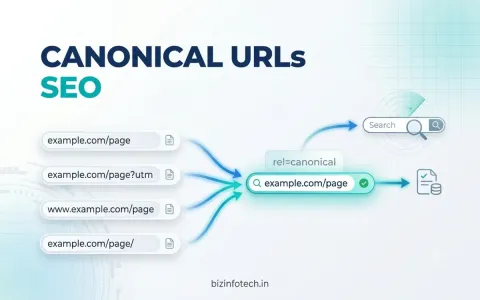
Canonical URLs
Use canonical signals to help search engines understand preferred versions of similar or duplicate URLs.
Mobile Compatibility
Ensure that the website works properly across mobile devices.
Page Speed
Optimize images, code, caching, and other performance factors.
HTTPS
Use secure HTTPS connections.
Broken Links
Regularly identify and fix broken internal and external links where appropriate.
Redirects
Use redirects correctly when URLs change.
Structured Data
Where appropriate, implement structured data to help search engines understand specific types of content.
Clean URL Structure
Use descriptive and readable URLs.
For example:
Good:
example.com/how-search-engines-work
Less descriptive:
example.com/page?id=48392
Technical SEO does not replace good content. Instead, it creates a stronger technical foundation for that content.
Crawling vs. Indexing vs. Ranking: A Simple Example
Suppose you publish a new article titled:
"10 Digital Marketing Strategies for Small Businesses"
Step 1: Crawling
A search engine discovers your article through an internal link or sitemap.
Step 2: Processing and Indexing
The search engine analyzes the article and determines its subject.
Step 3: Indexing
The page may be added to the search engine's index.
Step 4: User Search
Someone searches:
"Digital marketing strategies for small businesses"
Step 5: Ranking
The search engine compares your page with other relevant indexed pages.
Step 6: Search Result
If your page is considered sufficiently relevant and useful, it may appear in the search results.
This does not mean publication automatically guarantees a high ranking. Ranking depends on many factors and competition for the query.
Google, Bing, and Other Search Engines
Google is the most widely used search engine in many markets, but it is not the only one.
Other search engines include:
- Microsoft Bing
- Yahoo
- DuckDuckGo
- Yandex
- Baidu
All search engines have systems for discovering, processing, and retrieving information, but their algorithms, ranking systems, and priorities can differ.
Therefore, SEO principles such as:
- Creating useful content
- Maintaining a technically accessible website
- Building logical site architecture
- Improving user experience
are broadly valuable, even though specific ranking systems may vary.
How Artificial Intelligence Is Changing Search
Artificial intelligence is increasingly influencing how search engines understand information.
AI and machine learning can help systems better interpret:
- Natural language
- Context
- User intent
- Relationships between concepts
- Complex questions
- Content quality
- Search behavior
Search is also becoming more conversational.
Instead of simply returning ten blue links, modern search experiences may provide:
- Direct answers
- Featured results
- Knowledge panels
- AI-generated summaries
- Related questions
- Multimedia results
- Conversational interactions
This creates both opportunities and challenges for website owners.
The fundamental principle remains important:
Create content that is accurate, useful, original, well-structured, and genuinely valuable to your audience.
How Website Owners Can Help Search Engines
Website owners can improve discoverability and understanding by following several best practices.
1. Create Clear Page Titles
Use descriptive titles that accurately represent the page content.
2. Use Logical Headings
Organize content using a clear hierarchy of headings.
3. Build Strong Internal Links
Connect related articles and important pages.
4. Submit an XML Sitemap
Help search engines discover important URLs.
5. Maintain a Clean Website Structure
Keep navigation simple and logical.
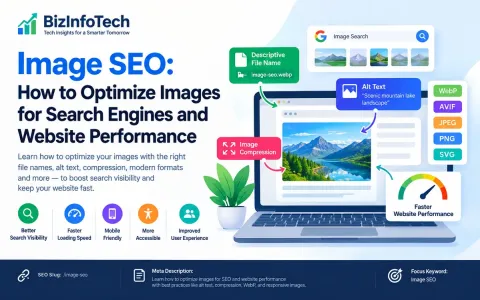
6. Optimize Images
Use descriptive file names, appropriate formats, and meaningful alternative text where appropriate.
7. Improve Website Performance
Optimize images, scripts, CSS, caching, and server performance.
8. Ensure Mobile Usability
Make sure users can easily read and navigate the site on smartphones and tablets.
9. Monitor Indexing
Use search engine webmaster tools to identify indexing and technical problems.
10. Avoid Accidental Blocking
Check robots.txt, meta robots directives, and other technical settings to ensure important pages are accessible.
Common SEO Mistakes That Can Hurt Visibility
Many websites struggle with search visibility because of basic technical or content problems.
Common mistakes include:
1. Accidentally Blocking Search Engines
Incorrect robots.txt rules can prevent crawlers from accessing important pages.
2. Using noindex Incorrectly
A noindex directive can prevent a page from appearing in search results.
3. Poor Internal Linking
Important pages may remain difficult to discover if they have few or no internal links.
4. Duplicate Content
Multiple pages with substantially similar content can create indexing and relevance challenges.
5. Thin Content
Pages with little useful information may provide limited value to users.
6. Keyword Stuffing
Excessive keyword repetition can make content unnatural and reduce its usefulness.
7. Slow Websites
Poor performance can create a frustrating user experience.
8. Ignoring Mobile Users
A website that works poorly on smartphones can lose valuable traffic and engagement.
9. Publishing Without a Content Strategy
Creating random articles without considering audience needs, search intent, or topical relevance can limit long-term growth.
10. Focusing Only on Rankings
SEO should not be measured only by ranking position. Important metrics also include:
- Organic traffic
- Click-through rate
- Engagement
- Conversions
- Leads
- Revenue
- Returning visitors
A Practical SEO Checklist for Search Engine Visibility
Before publishing an important page, ask:
Crawling
- Can search engines discover the page?
- Is the page linked internally?
- Is it included in the XML sitemap where appropriate?
- Is it accessible to crawlers?
Indexing
- Is the page allowed to be indexed?
- Does it have a correct canonical URL?
- Is the content original and valuable?
- Does the page provide enough information to satisfy the user?
Ranking
- Does the content match search intent?
- Is the topic covered comprehensively?
- Is the page easy to read?
- Are relevant internal links included?
- Does the website provide a good user experience?
Technical SEO
- Does the page load efficiently?
- Is it mobile-friendly?
- Does it use HTTPS?
- Are there broken links?
- Are structured data opportunities relevant?
Content Quality
- Is the information accurate?
- Is the article well-organized?
- Does it provide original value?
- Does it answer the reader's actual question?
The Complete Search Engine Process
Stage 1: Publication
You publish the article on your website.
Stage 2: DiscoveryA search engine discovers the URL through your sitemap or an internal link.
Stage 3: Crawling
The crawler visits the page and retrieves its content.
Stage 4: Processing
The search engine analyzes the page's text, structure, links, and other available signals.
Stage 5: Indexing
The page may be added to the search engine's index.
Stage 6: Query
A user searches:
"Website security tips for small businesses"
Stage 7: Retrieval
The search engine identifies potentially relevant indexed pages.
Stage 8: Ranking
The search engine evaluates the relevance and usefulness of those pages.
Stage 9: Search Results
Your page may appear in the results if it is considered relevant and competitive for that query.
This demonstrates why SEO is not simply about publishing an article and adding keywords. The entire process—from discovery to ranking—must work effectively.
Frequently Asked Questions
1. What is crawling in SEO?
Crawling is the process through which search engine bots discover and visit web pages to collect information about them.
2. What is indexing in SEO?
Indexing is the process of analyzing, organizing, and storing information about discovered web pages so they can potentially be retrieved for relevant searches.
3. What is ranking in SEO?
Ranking is the process of determining the order in which relevant indexed pages appear in search results.
4. Can a page be crawled but not indexed?
Yes. A search engine can crawl a page but decide not to include it in its index for various technical, quality, duplication, or other reasons.
5. How long does it take for Google to index a new page?
There is no guaranteed timeframe. It can vary depending on the website, the page, discovery methods, technical accessibility, content, and Google's own crawling and indexing processes.
6. Does submitting an XML sitemap guarantee indexing?
No. A sitemap helps search engines discover URLs, but it does not guarantee that every submitted URL will be crawled or indexed.
7. Do keywords still matter for SEO?
Yes. Keywords help communicate the topic of a page, but modern SEO should focus on natural language, topical relevance, and satisfying search intent rather than keyword repetition.
8. Are backlinks still important?
Links can help search engines discover content and may contribute to signals associated with authority and relevance. Quality and relevance are more important than simply obtaining a large number of links.
9. Why is internal linking important?
Internal links help users navigate a website and can help search engines discover pages and understand relationships between different pieces of content.
10. Does good content guarantee a high ranking?
No. High-quality content is important, but search rankings depend on many factors, including relevance, competition, technical accessibility, authority, and the overall search context.
Conclusion: From Crawling to Ranking
Search engines may appear simple from a user's perspective, but behind every search result is a complex process involving automated crawling, content processing, indexing, query understanding, and ranking systems.
The basic journey can be remembered as:
Crawling → Indexing → Ranking → Search Results
For website owners, the lesson is straightforward.
First, make your website accessible and discoverable.
Second, create content that search engines can understand and interpret.
Third, publish information that genuinely satisfies user intent.
Finally, build a technically sound website with strong internal linking, useful content, good usability, and a trustworthy online presence.
SEO is not about trying to manipulate a single ranking factor. It is about building a website that works well for both people and search engines.
When a website is easy to crawl, easy to understand, technically accessible, and genuinely useful, it has a stronger foundation for earning organic visibility over time.
Remember: Search engines discover pages through crawling, understand and organize them through indexing, and determine their visibility through ranking.
Understanding this fundamental process is the first step toward building a successful long-term SEO strategy.