Introduction
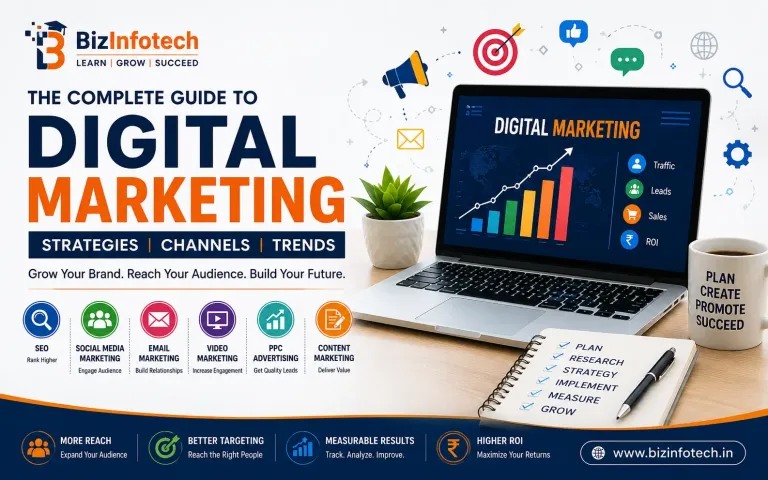
The rapid growth of the internet and digital technologies has transformed the way businesses communicate with customers. Traditional marketing methods such as newspapers, television, and radio remain relevant, but digital platforms now offer businesses greater reach, measurable results, and cost-effective marketing opportunities.
Digital marketing has become essential for organizations of all sizes. Whether promoting a local business, an educational institution, or a multinational corporation, digital marketing enables organizations to connect with their target audience through websites, search engines, social media, email, and mobile applications.
This article explores digital marketing, its importance, major channels, advantages, challenges, and future trends.
What is Digital Marketing?
Digital marketing refers to the promotion of products, services, or brands using digital technologies and internet-based platforms.
It involves attracting potential customers through online channels, building relationships, and converting visitors into loyal customers.
Unlike traditional marketing, digital marketing provides measurable results, allowing organizations to analyze campaign performance and continuously improve their strategies.
Why is Digital Marketing Important?
Digital marketing has become one of the most important business functions because it enables organizations to:
- Reach customers globally
- Target specific customer segments
- Generate quality leads
- Increase brand awareness
- Improve customer engagement
- Measure marketing performance
- Achieve better return on investment (ROI)
For startups and small businesses, digital marketing provides opportunities to compete with larger organizations using relatively limited budgets.
Major Digital Marketing Channels
1. Search Engine Optimization (SEO)
SEO is the process of improving a website's visibility on search engines such as Google.
SEO includes:
- Keyword research
- Quality content creation
- Technical optimization
- Link building
- Mobile optimization
- Website speed improvement
A well-optimized website receives higher organic traffic without paying for advertisements.
2. Search Engine Marketing (SEM)
SEM involves paid advertisements displayed on search engine results pages.
Businesses bid on keywords, and advertisements appear when users search for related terms.
Benefits include:
- Instant visibility
- Highly targeted audience
- Fast lead generation
- Measurable campaign performance
3. Content Marketing
Content marketing focuses on creating valuable and informative content that attracts and retains customers.
Examples include:
- Blog articles
- E-books
- Infographics
- Videos
- Podcasts
- Case studies
High-quality content builds trust and improves search engine rankings.
4. Social Media Marketing
Businesses use platforms such as Facebook, LinkedIn, Instagram, X, and YouTube to engage with customers.
Objectives include:
- Brand awareness
- Customer interaction
- Product promotion
- Community building
- Website traffic generation
5. Email Marketing
Email marketing remains one of the most effective digital marketing channels.
Businesses send newsletters, promotional offers, educational content, and personalized recommendations directly to subscribers.
Benefits include:
- High ROI
- Customer retention
- Personalized communication
- Automation opportunities
6. Affiliate Marketing
Affiliate marketing allows individuals or organizations to promote products and earn commissions for successful referrals.
It is widely used by bloggers, influencers, and online publishers.
7. Influencer Marketing
Influencers with large online audiences promote products and services to their followers.
Consumers often trust recommendations from influencers more than traditional advertisements.
8. Mobile Marketing
With billions of smartphone users worldwide, mobile marketing has become increasingly important.
Common methods include:
- Mobile applications
- SMS marketing
- Push notifications
- Mobile-friendly websites
Benefits of Digital Marketing
Digital marketing offers numerous advantages.
Global Reach
Businesses can connect with customers across different countries without establishing physical offices.
Cost-Effective
Compared with television or newspaper advertising, digital marketing requires relatively lower investment.
Better Targeting
Organizations can target audiences based on:
- Age
- Gender
- Interests
- Location
- Occupation
- Online behavior
Measurable Performance
Businesses can monitor:
- Website traffic
- Conversion rates
- Customer engagement
- Click-through rate (CTR)
- Return on investment (ROI)
Improved Customer Relationships
Digital platforms enable two-way communication between businesses and customers.
Digital Marketing Strategy
An effective digital marketing strategy generally includes the following steps:
- Define business objectives.
- Identify the target audience.
- Conduct market research.
- Select appropriate digital channels.
- Create valuable content.
- Implement SEO.
- Launch marketing campaigns.
- Monitor analytics.
- Optimize performance continuously.
Challenges of Digital Marketing
Although digital marketing offers numerous benefits, businesses also face several challenges.
- Increasing competition
- Rapid technological changes
- Privacy regulations
- Ad fatigue
- Cybersecurity concerns
- Constant algorithm updates
- Content overload
Organizations must continuously adapt to remain competitive.
Emerging Trends in Digital Marketing
Artificial Intelligence (AI)
AI is transforming marketing through:
- Chatbots
- Predictive analytics
- Personalized recommendations
- Automated content generation
- Customer behavior analysis
Voice Search Optimization
Voice assistants such as Google Assistant, Alexa, and Siri are changing how consumers search for information.
Businesses should optimize content for conversational search queries.
Video Marketing
Short-form videos continue to dominate social media engagement.
Educational videos, product demonstrations, and tutorials significantly improve audience interaction.
Marketing Automation
Automation tools help businesses:
- Schedule campaigns
- Send personalized emails
- Manage customer journeys
- Generate reports
- Improve productivity
Personalization
Customers increasingly expect personalized experiences.
Businesses analyze customer data to deliver customized recommendations, offers, and content.
Career Opportunities in Digital Marketing
Digital marketing offers excellent career prospects.
Popular job roles include:
- SEO Specialist
- Digital Marketing Manager
- Content Strategist
- Social Media Manager
- PPC Expert
- Email Marketing Specialist
- Marketing Analyst
- Web Analytics Consultant
- AI Marketing Specialist
- Digital Marketing Trainer
Freelancing and entrepreneurship also provide attractive career opportunities.
Best Practices for Successful Digital Marketing
- Understand customer needs.
- Create valuable content.
- Optimize websites for mobile devices.
- Focus on user experience.
- Maintain consistent branding.
- Monitor analytics regularly.
- Stay updated with industry trends.
- Experiment with new technologies.
Conclusion
Digital marketing has revolutionized business communication and customer engagement. By integrating SEO, content marketing, social media, email marketing, and emerging technologies such as artificial intelligence, organizations can build stronger relationships with customers and achieve sustainable growth.
As digital technologies continue to evolve, businesses that embrace innovation, prioritize customer experience, and adopt data-driven marketing strategies will remain competitive in the modern marketplace.
Whether you are a student, entrepreneur, researcher, or marketing professional, developing digital marketing skills has become an essential requirement in today's digital economy.
Frequently Asked Questions (FAQs)
1. What is digital marketing?
Digital marketing is the promotion of products and services using digital platforms such as websites, search engines, social media, and email.
2. What is the difference between SEO and SEM?
SEO improves organic search rankings, while SEM uses paid advertisements to gain visibility.
3. Which digital marketing channel is most effective?
The most effective channel depends on business objectives. A combination of SEO, content marketing, email marketing, and social media generally produces the best results.
4. Is digital marketing a good career?
Yes. It offers diverse career opportunities, competitive salaries, freelancing options, and strong future demand.
References
- Chaffey, D., & Ellis-Chadwick, F. Digital Marketing. Pearson.
- Kotler, P., Kartajaya, H., & Setiawan, I. Marketing 6.0: The Future Is Immersive. Wiley.
- Ryan, D. Understanding Digital Marketing. Kogan Page.
- Google Search Central Documentation.
- HubSpot Digital Marketing Resources.