Introduction
Marketing has always been the foundation of business growth. No matter how innovative your product or service is, success depends on your ability to reach the right audience, communicate value, and build lasting relationships with customers.
In 2026, marketing is no longer limited to television advertisements or newspaper promotions. Businesses now have access to digital platforms, artificial intelligence, data analytics, automation, and personalized communication that allow them to connect with customers more effectively than ever before.
Whether you are a startup, a small business owner, or an established enterprise, understanding modern marketing is essential for sustainable growth.
What Is Marketing?
Marketing is the process of identifying customer needs, creating valuable products or services, communicating their benefits, and delivering value that satisfies customers while achieving business objectives.
In simple terms:
Marketing is about creating value for customers and building profitable relationships with them.
Marketing begins long before a product is sold and continues even after the purchase through customer support, engagement, and loyalty programs.
Why Marketing Is Important
Effective marketing helps businesses:
- Increase brand awareness
- Generate qualified leads
- Build customer trust
- Increase sales and revenue
- Understand customer behavior
- Differentiate from competitors
- Create long-term customer loyalty
Without marketing, even excellent products often remain unnoticed.
The Evolution of Marketing
Traditional Marketing
Traditional marketing includes:
- Television advertising
- Radio commercials
- Newspapers
- Magazines
- Billboards
- Flyers
- Direct mail
Although traditional marketing still has value in certain industries, it usually involves higher costs and offers limited audience targeting.
Digital Marketing
Digital marketing uses online channels such as:
- Websites
- Search engines
- Social media
- Mobile applications
- Online advertising
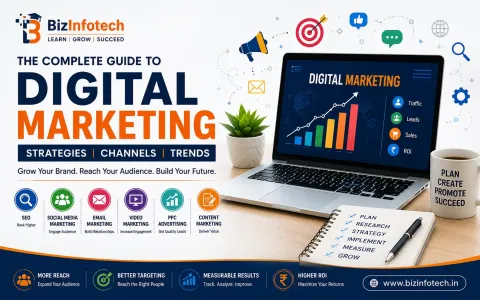
Digital marketing allows businesses to reach global audiences while measuring campaign performance in real time.
Read our complete guide to digital marketing:- The Complete Guide to Digital Marketing: Channels, Benifits, Strategies and Future Trends (2026)
The Marketing Mix (The 4 Ps)
A successful marketing strategy is built around the four Ps.
1. Product
The product must solve a customer problem or satisfy a specific need.
Questions to ask:
- What value does it provide?
- How is it different?
- Why should customers choose it?
2. Price
Pricing influences purchasing decisions.
Businesses should consider:
- Production costs
- Competitor pricing
- Customer willingness to pay
- Profit margins
3. Place
Place refers to where customers can purchase the product.
Examples include:
- Physical stores
- Company websites
- Online marketplaces
- Mobile apps
4. Promotion
Promotion involves communicating with customers through:
- Advertising
- Public relations
- Social media
- Content marketing
- Email marketing
- Influencer marketing
Types of Marketing
Content Marketing
Content marketing focuses on providing useful information instead of directly selling products.
Examples:
- Blog articles
- Videos
- Infographics
- Case studies
- Guides
Quality content builds authority and attracts organic traffic.
Search Engine Optimization (SEO)
SEO improves your website's visibility on search engines by helping your pages rank higher for relevant keywords. Effective SEO involves keyword research, creating high-quality content, improving page speed, optimizing for mobile devices, building quality backlinks, and ensuring a great user experience.
Achieving excellent technical SEO also means optimizing your website's loading speed and Core Web Vitals. If you're interested in practical optimization techniques, read our guide on How I Achieved a 100 SEO Score on Google PageSpeed Insights, where we share the exact improvements that helped maximize our PageSpeed Insights SEO score.
A well-optimized website not only ranks better in search results but also provides a faster, more enjoyable experience for visitors.
Social Media Marketing
Businesses use platforms like LinkedIn, Facebook, Instagram, and X to:
- Build communities
- Increase engagement
- Promote products
- Share updates
- Generate leads
Consistency and valuable content are key to success.
Email Marketing
Email remains one of the highest ROI marketing channels.
Businesses use email for:
- Newsletters
- Promotions
- Product launches
- Customer onboarding
- Retention campaigns
Personalized emails generally achieve higher engagement than generic messages.
Influencer Marketing
Companies collaborate with industry experts and creators who already have established audiences.
This strategy helps:
- Increase credibility
- Reach niche markets
- Build trust quickly
Video Marketing
Videos are among the most engaging forms of content.
Popular formats include:
- Tutorials
- Product demonstrations
- Customer testimonials
- Educational content
- Live streaming
The Role of Artificial Intelligence in Marketing
Artificial Intelligence (AI) is transforming marketing by automating repetitive tasks and improving decision-making.
Businesses now use AI for:
- Customer segmentation
- Personalized recommendations
- Chatbots
- Predictive analytics
- Email personalization
- Content generation
- Marketing automation
AI allows marketers to deliver better customer experiences while reducing operational costs.
To read more about artificial inteligence in business read the article How AI Is Transforming Strategic Decision-Making for Small Businesses in 2026
Data-Driven Marketing
Modern marketing relies heavily on data.
Businesses analyze:
- Website traffic
- Customer demographics
- Purchase history
- User behavior
- Campaign performance
- Conversion rates
This information enables better decisions and more effective marketing campaigns.
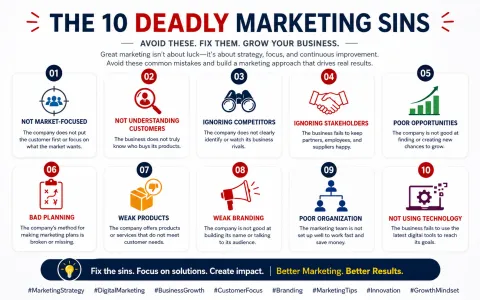
Common Marketing Mistakes
Many businesses fail because they:
- Ignore customer research
- Focus only on selling
- Neglect SEO
- Publish inconsistent content
- Lack a clear strategy
- Ignore analytics
- Fail to optimize for mobile users
Avoiding these mistakes can significantly improve marketing performance.
Building an Effective Marketing Strategy
A successful marketing strategy typically follows these steps:
- Define business objectives.
- Identify your target audience.
- Conduct market research.
- Analyze competitors.
- Choose the right marketing channels.
- Create valuable content.
- Measure performance using analytics.
- Continuously optimize campaigns.
Marketing is an ongoing process rather than a one-time activity.
Future Marketing Trends
Businesses should prepare for emerging trends, including:
- AI-powered personalization
- Voice search optimization
- Predictive analytics
- Conversational marketing
- Short-form video content
- Interactive experiences
- Privacy-focused marketing
- First-party data strategies
Organizations that embrace these innovations will remain competitive in the years ahead.
Conclusion
Marketing has evolved from simply promoting products to creating meaningful customer experiences. Modern businesses must combine strategy, technology, creativity, and data to achieve sustainable growth.
Whether you are running a local business or a global enterprise, investing in marketing is investing in the future of your business. By understanding your customers, leveraging digital technologies, and continuously adapting to market changes, you can build stronger relationships, improve brand visibility, and drive long-term success.
The businesses that succeed in 2026 are not necessarily those with the biggest budgets—they are the ones that understand their customers best and consistently deliver value through effective marketing.