Cybersecurity Strategies for Tech-Driven Enterprises
Introduction
The increasing reliance on digital technologies has made cybersecurity a top priority for modern enterprises. Businesses today depend on cloud computing, digital platforms, mobile devices, software applications, and interconnected networks to manage operations and serve customers. As a result, tech-driven organizations handle vast amounts of sensitive data and are increasingly exposed to sophisticated cyber threats.
A successful cyberattack can result in data breaches, financial losses, operational disruptions, regulatory consequences, and damage to an organization's reputation. The growing use of remote work, artificial intelligence, cloud services, and third-party technology providers has further expanded the digital attack surface.
A robust cybersecurity strategy is therefore not just an IT requirement—it is a core component of strategic management, enterprise risk management, and business continuity. Organizations must adopt a proactive and layered approach to protect their digital assets, maintain customer trust, and ensure long-term resilience.
This article explores the key cybersecurity strategies for tech-driven enterprises, including zero-trust security, risk assessment, multi-factor authentication, employee awareness, data protection, cloud security, incident response, and cybersecurity governance.
Understanding Cybersecurity in a Tech-Driven Business
Cybersecurity refers to the technologies, processes, policies, and practices used to protect computer systems, networks, applications, devices, and data from unauthorized access, cyberattacks, disruption, theft, or destruction.
For tech-driven enterprises, cybersecurity involves both technical controls and organizational practices. Firewalls, encryption, authentication systems, and security monitoring are important, but they must be supported by employee training, effective policies, risk management, and strong leadership.
The primary objectives of cybersecurity are often represented by the CIA Triad:
- Confidentiality: Ensuring that sensitive information is accessible only to authorized users.
- Integrity: Protecting data from unauthorized modification or manipulation.
- Availability: Ensuring that systems and data remain accessible to authorized users when required.
Tech-driven enterprises face increased cybersecurity risks because of their high dependence on digital infrastructure. Cloud platforms, remote employees, mobile devices, APIs, third-party services, and interconnected applications can create multiple potential entry points for attackers.
Therefore, cybersecurity should be integrated into every layer of the organization, from technology infrastructure and software development to employee behavior and strategic decision-making.
Why Cybersecurity Is Important for Modern Enterprises
As businesses become increasingly dependent on digital technologies, cybersecurity has become a critical component of business strategy. Modern enterprises store sensitive customer information, financial records, intellectual property, and operational data across interconnected systems and cloud platforms. A security incident affecting any of these assets can disrupt business operations and damage an organization's reputation.
The importance of cybersecurity extends beyond preventing cyberattacks. A strong cybersecurity framework helps organizations maintain business continuity, protect customer trust, comply with applicable regulations, and reduce financial and operational risks.
Key reasons why cybersecurity is important for modern enterprises include:
- Protection of sensitive data: Safeguards customer, employee, financial, and business information from unauthorized access.
- Business continuity: Reduces the impact of cyber incidents that can interrupt critical operations.
- Customer trust: Demonstrates that the organization takes data protection and privacy seriously.
- Financial risk reduction: Helps minimize losses associated with fraud, ransomware, data breaches, and operational downtime.
- Regulatory compliance: Supports compliance with applicable data protection and industry-specific requirements.
- Protection of intellectual property: Helps secure proprietary technologies, research, strategies, and other valuable business assets.
- Competitive advantage: Organizations with strong cybersecurity practices can build greater confidence among customers, partners, and investors.
For tech-driven enterprises, cybersecurity should therefore be viewed as a strategic investment that protects both current operations and long-term business growth.
Top Cybersecurity Threats Facing Modern Enterprises
Modern enterprises face a constantly evolving cybersecurity threat landscape. Cybercriminals use a combination of technical vulnerabilities, stolen credentials, social engineering, and automated tools to target organizations.
Some of the most significant cybersecurity threats include:
Phishing Attacks
Phishing attacks use fraudulent emails, messages, websites, or other communication methods to trick users into revealing passwords, financial information, or sensitive business data.
Attackers may impersonate senior executives, banks, customers, technology providers, or government agencies. Employee awareness training, email security controls, and multi-factor authentication can help reduce the risk of successful phishing attacks.
Ransomware
Ransomware is malicious software designed to prevent users from accessing systems or data, often by encrypting files. Attackers typically demand payment in exchange for restoring access.
Modern ransomware attacks may also involve data theft, with criminals threatening to publish confidential information if their demands are not met.
Organizations can reduce ransomware risks through secure backups, network segmentation, endpoint protection, timely patching, access controls, and employee security awareness.
Data Breaches
A data breach occurs when unauthorized individuals gain access to confidential or sensitive information. This may include customer records, employee information, financial data, passwords, or intellectual property.
Data breaches can result in financial losses, legal and regulatory consequences, reputational damage, and loss of customer trust. Strong access controls, encryption, monitoring, and data protection policies are essential for reducing this risk.
Insider Threats
Cybersecurity threats can also originate from within an organization. Employees, contractors, or business partners may intentionally or unintentionally expose sensitive information or compromise systems.
Insider threats can be reduced through least-privilege access, role-based permissions, employee training, regular access reviews, and appropriate monitoring.
Zero-Day Exploits
Zero-day exploits target previously unknown or unpatched security vulnerabilities before organizations have had sufficient time to implement effective fixes.
Because these vulnerabilities may not yet have an available patch, organizations should use multiple layers of defense, including threat monitoring, network segmentation, endpoint security, and rapid vulnerability management.
Supply Chain and Third-Party Cybersecurity Risks
Modern enterprises often depend on third-party vendors, cloud service providers, software developers, payment processors, and technology partners to operate their businesses. While these relationships provide valuable services and improve efficiency, they can also introduce additional cybersecurity risks.
A security weakness in a third-party vendor or software provider can potentially expose the systems and data of multiple organizations. Attackers may target smaller or less-secure suppliers as an indirect route to reach larger enterprises.
Common third-party and supply chain cybersecurity risks include:
- Compromised software: Malicious code or vulnerabilities introduced into software and applications supplied by external providers.
- Vendor data breaches: Unauthorized access to sensitive business or customer data stored or processed by third parties.
- Weak access controls: Excessive or poorly managed vendor access to organizational systems.
- Cloud service risks: Security incidents involving external cloud platforms or infrastructure providers.
- Unpatched third-party systems: Vulnerabilities in vendor-managed systems that remain unresolved.
Organizations can reduce these risks by conducting third-party security assessments, limiting vendor access through the principle of least privilege, monitoring external connections, and including appropriate cybersecurity requirements in vendor contracts.
Effective supply chain security requires organizations to understand not only their own cybersecurity posture but also the risks associated with the broader ecosystem of partners and service providers on which their digital operations depend.
Core Cybersecurity Strategies for Enterprises
A strong cybersecurity program requires a layered approach that combines technology, processes, policies, and employee awareness. No single security solution can protect an organization from every possible cyber threat.
The following strategies can help tech-driven enterprises strengthen their cybersecurity posture.
1. Implement a Zero-Trust Security Model
The Zero Trust security model operates on the principle that no user, device, application, or connection should be automatically trusted.
Unlike traditional security models that may assume users inside an organization's network are trustworthy, Zero Trust requires continuous verification before granting access to resources.
Organizations implementing Zero Trust should:
- Verify user identities before granting access.
- Authenticate devices and applications.
- Apply least-privilege access controls.
- Segment networks and critical resources.
- Continuously monitor user and system activity.
- Restrict access based on business requirements.
Zero Trust is particularly relevant for organizations using cloud infrastructure and supporting remote or hybrid work environments.
2. Regular Risk Assessment and Audits
Cybersecurity risks change as organizations introduce new technologies, applications, devices, and business processes. Regular risk assessments and security audits help identify weaknesses before they are exploited.
Organizations should regularly evaluate:
- System vulnerabilities
- Software configurations
- User permissions
- Access logs
- Cloud environments
- Security policies
- Third-party risks
Security assessments should prioritize vulnerabilities according to their potential impact on critical business operations and sensitive data.
3. Multi-Factor Authentication (MFA)
Passwords alone may not provide sufficient protection against modern cyber threats. Multi-factor authentication (MFA) requires users to provide two or more forms of verification before accessing a system.
MFA can be particularly important for:
- Administrator accounts
- Cloud platforms
- Remote access systems
- Email accounts
- Financial applications
- Business-critical systems
Implementing MFA can significantly reduce the risk of unauthorized access resulting from compromised or stolen credentials.
4. Endpoint Security Management
Laptops, desktops, smartphones, and tablets are common targets for cyberattacks, particularly in organizations that support remote and hybrid work.
Enterprises should protect endpoints through:
- Endpoint detection and response (EDR)
- Anti-malware solutions
- Device encryption
- Regular security updates
- Application controls
- Remote-wipe capabilities
Mobile Device Management (MDM) solutions can also help organizations centrally manage company-owned devices and enforce security policies.
5. Employee Training and Cyber Hygiene
Employees are an important part of an organization's cybersecurity defense. Even advanced security systems can be undermined by phishing, social engineering, weak passwords, or unsafe online behavior.
Organizations should provide regular cybersecurity awareness training covering:
- Phishing and social engineering
- Password security
- Multi-factor authentication
- Suspicious links and attachments
- Safe browsing practices
- Data handling
- Incident reporting
Rather than relying only on strict password-change requirements, organizations should promote strong, unique passwords and modern authentication practices appropriate to their risk environment.
A strong cybersecurity culture ensures that employees understand that protecting digital assets is a shared responsibility.
6. Data Encryption and Backup
Sensitive information should be protected through encryption both when it is stored and when it is transmitted.
Organizations should consider encryption for:
- Customer information
- Financial records
- Employee data
- Intellectual property
- Business communications
Regular backups are equally important. Organizations should maintain secure, automated backups and periodically test whether critical data can be successfully restored.
A robust backup strategy should include appropriate access controls and, where possible, isolated or offline backup copies to reduce the impact of ransomware and other destructive attacks.
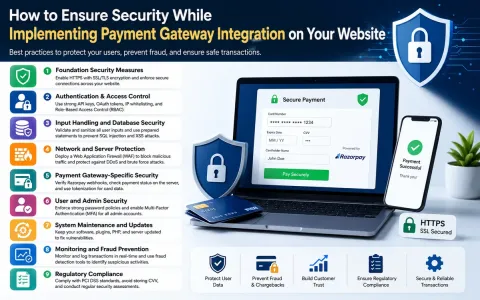
Businesses that process online payments should also pay particular attention to payment security. Learn more about How to Ensure Security While Implementing Payment Gateway Integration on Your Website and the security measures that can help protect online transactions and customer payment data.
7. Secure Cloud Infrastructure
Cloud computing has become an essential part of modern enterprise technology. However, cloud adoption also introduces security responsibilities related to identity management, access controls, configurations, data protection, and monitoring.
Organizations should:
- Use strong identity and access controls.
- Apply multi-factor authentication.
- Encrypt sensitive information.
- Monitor cloud activity and security logs.
- Regularly review cloud configurations.
- Restrict unnecessary access.
- Understand the shared responsibility model.
Organizations should also evaluate cloud providers based on their security practices and relevant certifications or attestations, such as ISO/IEC 27001 or SOC 2, where applicable.
8. Develop an Incident Response Plan
Even organizations with strong preventive security measures may experience cyber incidents. A documented incident response plan enables organizations to respond quickly and systematically when an attack or data breach occurs.
An effective plan should define:
- How incidents are detected and reported.
- Who is responsible for responding.
- How affected systems are isolated.
- How evidence is preserved.
- How internal and external stakeholders are informed.
- How systems and data are recovered.
- How lessons learned are documented.
Organizations should periodically test their incident response procedures through simulations and exercises.
Identity and Access Management (IAM)
Identity and Access Management (IAM) is a critical component of modern enterprise cybersecurity. IAM enables organizations to control who can access systems, applications, networks, and data and what level of access each user is permitted to have.
An effective IAM strategy ensures that employees and other authorized users receive only the permissions required to perform their responsibilities. This follows the principle of least privilege, which helps limit the potential damage caused by compromised accounts or insider threats.
Important IAM practices include:
- Role-Based Access Control (RBAC): Assign permissions according to an individual's job role and responsibilities.
- Least-privilege access: Provide users with only the minimum access necessary to perform their work.
- Privileged Access Management (PAM): Protect and monitor accounts with elevated administrative privileges.
- Strong authentication: Use secure authentication methods, including multi-factor authentication, for sensitive systems.
- Regular access reviews: Periodically review user permissions and remove unnecessary access.
- Offboarding controls: Immediately disable accounts and access rights when employees or contractors leave the organization.
By strengthening identity and access management, enterprises can reduce unauthorized access and improve control over their digital environments.
Vulnerability Management and Security Patching
Cybersecurity vulnerabilities can exist in operating systems, applications, network devices, cloud environments, and other technology assets. Attackers often attempt to exploit these weaknesses to gain unauthorized access or disrupt business operations.
A structured vulnerability management program helps organizations identify and address security weaknesses before they are exploited.
The process typically involves:
- Asset discovery: Identify hardware, software, applications, and systems operating within the organization.
- Vulnerability scanning: Use appropriate tools to identify known security weaknesses.
- Risk assessment: Evaluate vulnerabilities based on their severity, exploitability, and potential business impact.
- Prioritization: Address critical vulnerabilities and high-risk systems first.
- Security patching: Apply vendor-provided security updates and patches in a timely manner.
- Verification: Confirm that vulnerabilities have been successfully addressed.
- Continuous monitoring: Regularly reassess systems as new vulnerabilities emerge.
Organizations should also maintain an accurate inventory of their technology assets and establish a clear patch management process. Timely security updates can significantly reduce exposure to known vulnerabilities.
Advanced Cybersecurity Tactics
As cyber threats become more sophisticated, enterprises are increasingly adopting advanced technologies and security practices to improve threat detection and response.
Behavioral Analytics
Behavioral analytics uses data analysis, artificial intelligence, and machine learning techniques to identify unusual patterns in user or system behavior.
For example, an employee account that suddenly attempts to access large volumes of sensitive data from an unusual location may trigger a security alert.
Security Information and Event Management (SIEM)
SIEM systems collect and analyze security logs and events from multiple sources across an organization's technology environment.
A SIEM platform can help security teams:
- Centralize security information.
- Identify suspicious activity.
- Correlate events from different systems.
- Investigate potential security incidents.
- Support security monitoring and compliance activities.
Penetration Testing
Penetration testing involves authorized security testing designed to identify vulnerabilities before they can be exploited by malicious attackers.
Organizations may conduct penetration testing on websites, applications, APIs, networks, and cloud environments. Testing should be performed by qualified professionals within clearly defined legal and technical boundaries.
Vulnerability Management
A structured vulnerability management program enables organizations to continuously identify, assess, prioritize, and address security weaknesses.
The process typically involves asset discovery, vulnerability scanning, risk assessment, remediation, verification, and continuous monitoring.
Security by Design
Security by Design is an approach in which cybersecurity and privacy considerations are integrated into the development and implementation of technology from the beginning rather than being added after a system has been deployed.
For tech-driven enterprises, security should be considered throughout the entire technology lifecycle, including planning, design, development, testing, deployment, and maintenance.
Security by Design practices may include:
- Defining security requirements before development begins
- Following secure software development practices
- Conducting security testing during development
- Protecting application programming interfaces (APIs)
- Using secure authentication and authorization mechanisms
- Encrypting sensitive information
- Regularly reviewing application vulnerabilities
- Monitoring systems after deployment
Integrating security into technology development can help organizations identify weaknesses earlier, reduce remediation costs, and build more resilient digital products and services.
For software-driven businesses, Security by Design also supports a proactive approach in which cybersecurity becomes part of the organization's technology strategy rather than an afterthought.
Cybersecurity Compliance and Governance
Cybersecurity governance provides the policies, responsibilities, processes, and oversight needed to manage information security effectively.
Organizations should maintain clear policies covering:
- Access control
- Password and authentication practices
- Data protection
- Acceptable technology use
- Remote work
- Device security
- Incident reporting
- Third-party access
Depending on the industry, location, and type of data handled, organizations may also need to comply with applicable laws, regulations, and industry standards.
Examples include:
- GDPR: Relevant to the protection of personal data under applicable circumstances.
- HIPAA: Applies to certain healthcare-related organizations and protected health information in the United States.
- PCI DSS: Provides security requirements for organizations involved in payment card data environments.
- ISO/IEC 27001: Provides a framework for establishing and continually improving an information security management system.
- SOC 2: Provides a framework for evaluating controls relevant to areas such as security and other trust service criteria.
Compliance should not be treated as a substitute for cybersecurity. Regulatory compliance represents only one part of a broader security strategy.
Vendor Risk Management
Organizations should evaluate the cybersecurity practices of third-party vendors before providing access to sensitive systems or information.
Vendor risk assessments may consider:
- Data access requirements
- Security controls
- Compliance practices
- Incident response capabilities
- Data protection procedures
- Contractual security requirements
Vendor access should also be reviewed periodically and removed when it is no longer required.
The Role of Leadership in Cybersecurity
Cybersecurity is not solely an IT responsibility. Senior management and organizational leaders play an important role in establishing security priorities, allocating resources, and creating a culture of cybersecurity awareness.
Leadership should understand the organization's most critical digital assets, major cybersecurity risks, regulatory obligations, and potential business consequences of a security incident.
Effective leadership can support cybersecurity by:
- Establishing clear cybersecurity policies and responsibilities
- Allocating appropriate resources for security initiatives
- Supporting employee cybersecurity awareness programs
- Reviewing major cybersecurity risks regularly
- Ensuring that critical systems have appropriate protection
- Supporting incident response and business continuity planning
- Integrating cybersecurity into enterprise risk management
- Evaluating cybersecurity risks associated with technology investments and third-party vendors
When cybersecurity is supported by senior leadership, organizations are more likely to develop a strong security culture and respond effectively to emerging threats.
Ultimately, cybersecurity should be treated as a business risk and strategic management issue, not simply as a technical problem handled by the IT department.
Benefits of a Strong Cybersecurity Framework
A comprehensive cybersecurity framework can provide several important benefits for tech-driven enterprises.
Business Continuity
Effective cybersecurity measures can reduce the likelihood and impact of incidents that disrupt critical business operations.
Customer Trust
Customers and business partners are more likely to trust organizations that demonstrate responsible data protection and strong security practices.
Competitive Advantage
Organizations with mature cybersecurity capabilities can strengthen their reputation and potentially gain an advantage when customers evaluate technology providers and business partners.
Protection of Business Reputation
A major cybersecurity incident can significantly damage an organization's reputation. Preventive security controls and effective incident response can help reduce this risk.
Reduction of Financial and Regulatory Risks
Strong security controls can help reduce potential financial losses from fraud, data breaches, operational downtime, and applicable regulatory consequences.
Cybersecurity Best Practices Checklist
Tech-driven enterprises can strengthen their cybersecurity posture by following a consistent set of best practices:
- Implement multi-factor authentication for critical systems.
- Adopt zero-trust security principles where appropriate.
- Apply least-privilege access controls.
- Conduct regular cybersecurity risk assessments.
- Keep operating systems and software updated.
- Establish a structured vulnerability and patch management process.
- Encrypt sensitive data during storage and transmission.
- Maintain regular and secure backups.
- Test data recovery and disaster recovery procedures.
- Protect laptops, desktops, mobile devices, and other endpoints.
- Train employees to recognize phishing and social engineering attacks.
- Monitor networks, systems, and cloud environments for suspicious activity.
- Conduct vulnerability assessments and penetration testing where appropriate.
- Develop and regularly test an incident response plan.
- Evaluate the cybersecurity practices of third-party vendors.
- Maintain updated cybersecurity policies and procedures.
- Integrate security into software and technology development.
- Monitor cybersecurity performance using relevant metrics.
- Review user access and permissions regularly.
- Keep cybersecurity aligned with business objectives and regulatory requirements.
A cybersecurity checklist should not be treated as a one-time exercise. Organizations should regularly review and update their security practices as technologies, business operations, and cyber threats evolve.
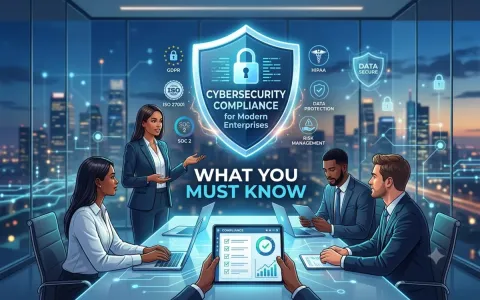
Discover also:- Cybersecurity Compliance for Modern Enterprises: What You Must Know
Conclusion
Cybersecurity is a strategic business enabler, not just an IT function. As enterprises become increasingly dependent on cloud platforms, digital applications, connected devices, and third-party technology services, their exposure to cyber threats continues to grow.
A resilient cybersecurity strategy requires multiple layers of protection, including Zero Trust, multi-factor authentication, identity and access management, endpoint security, data encryption, secure cloud infrastructure, employee awareness, vulnerability management, and effective incident response.
At the same time, cybersecurity should be treated as an ongoing process rather than a one-time project. Organizations must continuously assess emerging threats, review security controls, update policies, and strengthen employee awareness.
By embedding cybersecurity into strategic management and creating a culture of cyber awareness, tech-driven enterprises can protect valuable assets, maintain customer trust, reduce business risk, and build a more resilient and future-ready organization.